Pornographer
Pornographer
The Last Pornographer © Estate of REX.
All artworks, drawings, photographs, and writings by REX reproduced in this volume are © Estate of REX, all rights reserved. No image or text may be reproduced, distributed, or used for training of machine-learning systems without written permission from the Estate. REX and the REX mark are used with the authorization of the Estate.
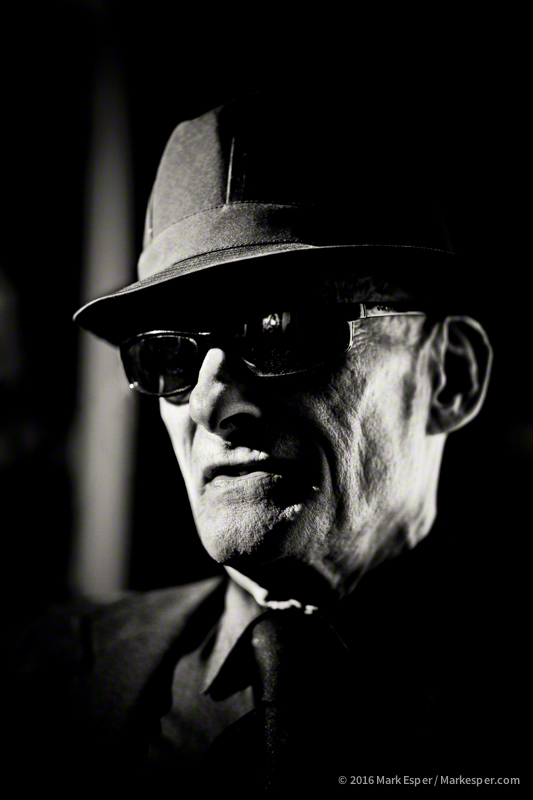
Frontispiece photograph: Mark Esper. © 2016 Mark Esper / Markesper.com.
Published by the Estate of REX · Printed by the Estate of REX · ISBN: Estate of REX
First edition, 2026. Set in Poppins.
For licensing, exhibition, or acquisition inquiries, contact the Estate through rexpaganart.com.
For the men who stood for these drawings,
and for the ones who kept them safe —
the wolves, the outlaws, the survivors.
There is a photograph, taken at an opening in 2015, of an old man in Amsterdam standing before a wall of his own drawings. He is not performing for the camera. He had spent fifty years learning not to. The man was REX, and the drawings behind him — each one built from millions of individually placed dots of ink — belong to one of the most rigorous, most stubborn, and most deliberately unassimilated bodies of work in twentieth-century American art. This book is his life.
Why publish it now? Because the work survived, and survival was the whole wager. REX drew for a world that official culture pretended did not exist: the leather bars and bathhouses of post-Stonewall New York, the piers, the flophouses, the men known to their own as rough trade and to everyone else not at all. He drew them without apology and without softening, in a stippled technique of such patience that a single sheet could take months — chiaroscuro assembled one point at a time, a printmaker’s discipline spent on subject matter no museum would hang. When the paperback publishers of Rough Trade gave him his first pages in 1972, and when the Mineshaft commissioned the poster trilogy that fixed his hard-hatted miner at the center of gay New York’s visual identity, the audience that mattered found him. It never let him go.
The institutions were slower. Through the San Francisco years of the 1980s he lived as underground artists live — bar posters, leather-shop commissions, the mail-order portfolios issued as Drawings by REX — while AIDS emptied the world his ink had recorded. In the 1990s the American culture wars offered him censorship where curatorship was due, and he answered by leaving America altogether. From Amsterdam, where he worked until his death in March 2024, he took the epithet flung at him and set it on the door: the last pornographer. He meant it as a title, and he earned it as one — an insistence that the desire of gay men deserved the same draughtsmanship, the same seriousness, the same permanence as any sanctioned subject in the history of art.
His peers understood the stakes. Tom of Finland, whose example first showed him the path in 1969, found in REX a successor in rigor if not in temperament; where Tom drew joy, REX drew hunger, and the dark it lives in. The Leslie-Lohman Museum sheltered the work when almost no one else would. Collectors passed the portfolios hand to hand in plain envelopes, and men who never set foot in a gallery carried his images on their backs — one of them, wearing the Mineshaft design in 1978, was Freddie Mercury, in front of the cameras of the whole world. The underground kept the archive alive because the underground knew what it had.
That archive — hundreds of original drawings, the self-published magazines, the commercial work, the portraits — passed to the Estate of REX, which has undertaken to keep it whole: catalogued, authenticated, in print in the five authorized anthologies, and now told as a life. What follows was assembled from the record REX left and the record he tried to leave — the two were rarely the same, and the distance between them is part of the story. He invented himself completely: a name with no surname, a childhood rewritten, an exile half-chosen and half-imposed. The chapters ahead take both the facts and the myth seriously, because REX built the myth with the same deliberation he gave the dots.
He liked to say that surviving is the best revenge. The work survived him. Revenge, then, is now a matter of record — and this book is the record.
— The Estate of REX, Amsterdam, 2026
This volume is published by the Estate of REX, which holds the artist’s archive and acts under the authority he granted it before his death in Amsterdam in March 2024.
The text was prepared from the materials of that archive: REX’s own writings and self-published magazines, his correspondence and interviews, the commercial and private commissions that document his working life, and the recollections of the collectors, publishers, and friends who sustained the work across five decades. Where REX’s own account of his life diverges from the documentary record — and it often does, by his design — the chapters say so plainly and let both versions stand, for the invention was his medium as surely as the ink.
Every artwork reproduced or cited in these pages is drawn from the Estate’s registered catalogue; the List of Works at the back of the book gives titles, dates, and dimensions as recorded in the Estate’s part master, and the Bibliography sets out the published sources. The authorized anthologies of REX’s work — Rough Trade, Adwerk, Leather Cult, Portfolios, and Bound — remain in print through the Estate.
REX asked that the work be kept together, kept accurate, and kept available. This book is published in service of that instruction.
— The Estate of REX
The man who signed himself REX was born Joseph C. Fifield in the early 1940s, abandoned by his mother in infancy and adopted into a middle-class household in Meriden, Connecticut. The stability of that upbringing — a stern, silent adoptive father, the emotional cushion of a mother and grandmother — did little to settle him. From his years at Platt High School onward, he set his inner mythology against the plain facts of his life, and it was in that gap that the persona of REX was invented: a name without a surname, an identity built to outlast the man who wore it. For more than five decades, until his death in Amsterdam in March 2024, that identity produced one of the most significant and uncompromising bodies of work in the art of the gay underground.
REX came of age as an artist in the years after Stonewall, when the gay press was expanding into territory no institution would touch. From 1972 he supplied artwork to Rough Trade, a pulp paperback series of S&M fiction sold discreetly in adult bookstores, and it was in those margins that he refined the technique that would define him: stippling — millions of individually placed dots of ink coalescing into scenes of extraordinary tonal depth. It was a printmaker’s discipline applied to forbidden subject matter, chiaroscuro built one point at a time, and no reproduction has ever fully diminished it.
Recognition, of a kind, came in New York in the late 1970s. His trilogy of posters for the Mineshaft — the city’s most notorious sex club — put a hard-hatted miner at the center of gay nightlife’s visual identity and made REX’s name inseparable from the leather culture whose language his drawings had helped to define. His subjects were the men the official culture refused to see: rough trade, lone wolves, the population of flophouses and bathhouses, rendered not as caricature but with the gravity of icons. Through the 1980s in San Francisco he sustained himself as underground artists must — commercial commissions for leather shops and bar posters, the mail-order portfolios issued as Drawings by REX, collaborations with figures like Bob Mainardi and David Hurles of Old Reliable — while the AIDS crisis emptied the world his work recorded.
The 1990s brought the confrontation that shadows this book’s title. In the era of the American culture wars, REX’s work was met with censorship rather than curatorship; he became, in his own framing, persona non grata — an artist whose technical mastery was never in dispute and whose subject matter placed him outside the museum’s tolerance. The Leslie-Lohman Museum stood as a rare sanctuary; the legacy of Tom of Finland, stewarded by Durk Dehner, offered a kindred precedent. But by the late 1990s REX had broken with America altogether, settling in Amsterdam, where he worked until the end of his life — turning in his later years to the surreal fetish circus of the Sex-Freak Circus drawings, a sideshow of homoerotic “freaks” and outcasts in which his lifelong subject, the outsider, reached its most explicit philosophical form.
He took the epithet that others meant as dismissal and wore it as a title. Pornography, in REX’s hands, was not a genre but a position: an insistence that desire — specifically the desire of gay men, specifically in its rawest forms — deserved the same draughtsmanship, the same compositional seriousness, the same permanence as any sanctioned subject. His drawings circulated in plain envelopes and clandestine galleries, passed hand to hand by a community that recognized their power long before any institution did. That community was right, and this book is, in part, the record of how long it took everyone else to catch up.
REX died in Amsterdam in March 2024. The Estate of REX now holds his archive — hundreds of original drawings, the self-published magazines, commercial illustrations, and commissioned portraits — and has undertaken to keep it catalogued, accessible, and in print, from the five authorized anthologies to the authenticated originals themselves. The Last Pornographer draws on that archive to tell the life whole: the invention of REX, the work, the exile, and the survival. Surviving, as he said, is the best revenge. This book is the proof.
Early Life and the invention of “REX”

Joseph C. Fifield, who later crafted a new identity as REX, was born into complex circumstances in the early 1940s. His early years were marked by abandonment when his mother left him, setting a precedent for the sense of desertion that would haunt him throughout his life. Adopted into the solid framework of a middle-class family in Meriden, Connecticut, he was afforded the stability that most would envy, yet this environment did little to quench his insatiable thirst for reinvention. His adoptive father, a man of stern demeanor, lacked tenderness and emotion, choosing silence and reserve as his paternal tools. It was within this silence that REX’s imagination found fertile ground. His mother and grandmother provided the emotional and financial cushion that allowed him to navigate his early years with security, yet the echoes of his past abandonment lurked beneath the surface.
For REX, the geographical and cultural landscape of Meriden presented a canvas from which he could juxtapose his ideal narrative against his everyday reality. Attending Platt High School and residing on Columbus Avenue, REX’s outer world clashed vehemently with his inner mythologies. He painted himself as a modern-day Huck Finn, weaving tales of hardship and estrangement that thrilled those who listened. In his heart, possibly, there was a feeling that the ordinariness of his life was in dissonance with the grandeur of the identity he sought to build. His fabricated childhood, “abandoned at birth” and surrounded by “oppressive circumstances,” served as a storytelling tool, allowing an extravagant divergence from truth that some speculate was a bid to escape the claustrophobia of bourgeois expectations.
The delight he derived from mythologizing his past was not merely a facet of his creativity but a psychological defense mechanism against the mundanity of his youthful experiences. Despite making good grades and being spotlighted in local papers for his involvement in drama productions, REX found the labels of 'ordinary' and 'conventional' suffocating. His participation in these high school accolades was a reality he acknowledged but internally contradicted by sketching out a romanticized existence among farmhands, fighting against adversities that he never truly faced. The bullying of an openly gay peer at school served as a stark reminder of the rejection and judgment lurking just beyond the walls of acceptance—a reminder that added fuel to his desire to control his narrative. It galvanized in him a powerful motivation: to escape the heterosexual confines of a Connecticut suburb and brand himself as an audacious outlaw, a personality as flamboyant as his newly chosen moniker suggested.
By the 1990s, REX quietly intertwined reality back into his life’s tapestry. The reconciliation with his biological mother, whom he supported in her later years, revealed the cracks in the façade of alienation he had so meticulously curated. Despite his lifelong portrayal as someone detached from family ties, this act of support quietly contradicted the disconnected image he had promulgated. It is evidence that this self-styled exile was not as complete as his legend suggested, proving perhaps that some of the familial bonds he dismissed were, in truth, far deeper than the narratives he offered to the world.
After graduating in the early 1960s, Joseph Fifield took a bold leap into the vibrant expanse of New York City, driven by the alluring promise of an artistic career. In a pivotal moment, which later served as a cornerstone in his self-narrative, he encountered a celebrated fashion designer. This fortuitous meeting became a turning point as it opened doors he had not dared to imagine. The designer saw in Fifield a potential for greatness and became a benefactor, sponsoring his education at the renowned School of Visual Arts in New York. This act of generosity epitomizes the dual nature of art mentorship: simultaneously a generous opportunity and a cloistering embrace that aligned his destiny with a sphere he later disavowed.
The mid-1960s found him swept into the glitzy whirl of London and Paris, where the tentacles of haute couture sought to tighten around him. This era, tinged with the freedom of creativity yet shackled by the frivolities it demanded, soon wore on the sensitive young artist. While the lavish travels across Europe offered him exposure to a world vibrant with possibility, they also revealed a veneer of polished superficiality that he instinctively rejected. In reflecting upon this period, Fifield expressed his growing conviction against the world of artifice; a sphere where true sentiment was obscured by the glamorous façades of wealth and status. The prevailing essence of this realization guided him away from the mainstream allure toward the shadowy allure of subcultures that lay beneath.
In Paris, Fifield's penchant for exploration saw him embracing the city's hidden underbelly with profound interest. He gravitated toward the “pissotières,” those gritty public spaces where anonymity reigned supreme, and societal inequalities dissolved into the night air. Here, amidst the mingling of individuals from myriad backgrounds, Fifield discovered a raw honesty absent from the curated masks of fashion circles. It is in these secretive encounters that he found true equality—an ethos that informed his artistic vision in subsequent years. This environment, rich in shared humanity and devoid of pretense, may have further influenced his personal inclinations, planting the seed for certain fetishes that linked physical authenticity to deeper emotional truths. In the dim light of those shadowy exchanges, he forged connections not just with the men who shared the spaces, but with an essential part of himself that sought truth in the unvarnished simplicity of human interaction. These experiences reframed his understanding of identity, molding an artistic ethos that celebrated the unpretentious and the real, even as it shied away from the spotlight of conventional success.
Though REX’s early patronage was a gilded promise of material support and creative encouragement, its psychological ramifications cast a longer shadow. The esteemed patron, while an advocate, wielded praise that was a double-edged sword. By anointing REX with the mantle of 'genius,' he simultaneously declared that this very genius—in its raw, unflinching exploration of male sexuality—would inevitably doom him to failure. This pronouncement was delivered with gravitas, as if echoing from the ancient oracles, and left an indelible mark on REX’s psyche. He was a young artist still sculpting his identity, and such stark prophetic words lodged themselves deep, stretching their roots into his growing self-conception.
Delphi’s whisper became a relentless internal soundtrack that both fueled and frustrated REX’s creative expression. At the heart of his work lay an audacious exploration of male sexuality, depicted through a lens that refused artifice and embraced the phallus as a symbol of raw power and vulnerability. This unwavering focus, however, became a flashpoint of contention, a barrier to acceptance within the traditional art world. Despite the technical prowess and bold narratives of his drawings, they were relegated to the shadows—circulated discreetly, safeguarded by plain envelopes, and displayed only in hushed, select circles. REX found inadvertent entrance into an underground gallery, where his works were revered, yet beyond which, they were met with systematic exclusion.
Yet, this deliberate marginalization did not deter him; rather, it reinforced a resolute defiance. The rejection he faced because of “what they insisted on showing” was, paradoxically, both a curse and a clarion call. This perpetual state of refusal became the crucible in which REX’s artistry was tempered, shaping his evolution into a provocateur who celebrated the very attributes that others condemned. Isolation fortified his resolve, while fostering a creative space unencumbered by mainstream dictates. Deep inside, the thwarted desire for broader recognition smoldered, yet it was often overshadowed by the pride of a craftsman whose work defied boundaries. This tension between yearning for acceptance and reveling in outsider status became a core motif within his life narrative, as REX crafted his identity as an artist unafraid to champion authenticity, regardless of the corridors in which it was celebrated.
The cruel irony of the patron's admonition gnawed at REX's consciousness, underscoring a painful truth about the art world's double standards. Despite the starkness of the warning, it was embedded in a context where legendary photographers and artists, like Peter Hujar and Robert Mapplethorpe, confronted similar challenges. The depiction of the penis—especially in its assertive state—acted as a cultural flashpoint, instantly transforming art into a provocative battleground. This symbolic detonator morphed viable compositions into subjects of controversy or outright exclusion. It was an artistic element laden with implications that transcended the visual and penetrated societal mores.
For gay artists like REX, whose works didn't merely feature the male body but pivoted around it in moments of heightened sensuality and fulfillment, the phallus was not an accessory but the crux of their narrative. Its inclusion was an assertion, an unwavering celebration of identity and desire that traditional art circles could rarely accommodate. REX understood that his choice to center the male form—and its appendage—ensured his work's unique voice while, paradoxically, reinforcing its marginalization. Unlike neutral artistic motifs, the exposure of the phallus risked confrontation, compelling audiences to address its complex signals and sociopolitical context.
As REX navigated this precarious terrain, bitterness settled in his bones—emerging from the realization that the phallus symbolized both his creative threshold and the barrier to wider acceptance. It was both his gateway into a niche echelon that celebrated unfiltered truth and the barricade erected by institutions unwilling to embrace such openness. This duality seeped into his artistry, coloring it with a defiant edge that challenged viewers to reframe their perceptions. REX's work embodied a delicate interplay of vulnerability and defiance, inviting introspection and sparking dialogue, yet consistently met with societal resistance. In capturing desire starkly and uncompromisingly, REX elevated the conversation on gender and sexuality, bearing the weight of its alienation as both a testament to and a critique of contemporary art's limitations.
The year 1969 brought a transformative encounter that unlocked a new realm of possibilities for REX. While navigating the labyrinth of emerging adult subcultures, he stumbled upon the daring pages of a magazine showcasing the work of Tom of Finland, whose depictions of assertive, hyper-masculine men engaged in passionate, enthusiastic unions were revelations in ink. These illustrations, charged with a bold defiance of heteronormative conventions, resonated with REX in a profoundly personal way. It was as if each line drawn by Tom spelled out a manifesto that mirrored the desires REX himself harbored but had yet to articulate. This encounter with Tom’s art was not merely inspirational; it was a spiritual ignition, propelling REX toward his own destiny in the landscape of erotic illustration.
Grasping the urgency of this newfound calling, REX channeled his realization into creative momentum, producing his own set of compelling, homoerotic illustrations. His foray into this genre led him to the doors of a New York adult publisher, who, struck by the potency of REX's vision, agreed to publish the daring works. Yet, before this new chapter could commence, he required a pen name—a new creative identity to accompany his artistic rebirth. It was in the publisher’s office, amidst the eclectic clutter of creativity, that REX found his moniker: a simple film canister emblazoned with a succinct title, "REX." This name, with its regal connotations, embodied both his emerging identity and an ironic nod to the playful trivialities of identity itself.
Adopting "REX" allowed Joseph Fifield to reconstruct his artistic identity, shedding the limitations of his past and embracing a persona unbounded by conventional expectations. The Latin designation symbolized kingly ascendancy and yet, with a hint of self-aware humor, echoed the commonality of a pet's name, underscoring the complexity of his transformation—a new life forged through art and freedom. REX emerged not just as a pseudonym but as a gateway to a reality infused with the authenticity he had long sought. As he embarked on this journey, the art he created echoed Tom of Finland's audacious celebration of life and identity while carving a niche that was distinctly his own in the broader world of gay fetish artistry.
Rough Trade and Early Gay Underground Publishing (1970–1975)
By the dawn of the 1970s, REX had carved a niche for himself within the vibrant yet clandestine world of the gay underground press. The burgeoning freedom brought forth by the Stonewall uprising was reflected in his contributions to a pulp paperback series that left little to the imagination with its unabashed title, Rough Trade. This collection catered to an audience eager for stories steeped in S&M fantasy, sold discreetly in adult bookstores where its potent subject matter could be consumed away from the public eye. Starting in 1972, REX became an indispensable part of this enterprise, delivering artwork that danced along the margins of acceptability and yet resonated profoundly within its niche community.
The decision to collaborate with a Mafia-funded pornographic imprint might have raised eyebrows, but for REX, it was an opportunity to refine his artistic voice—a chance to explore the boundaries of both technique and taboo. The Rough Trade series became a canvas on which he could deploy his signature style: a masterful use of pointillism, where millions of tiny dots coalesced into richly textured scenes. Through this intricate process, he breathed life into characters—burly bikers, leather-clad outlaws, and gritty roughnecks—captured in the throes of physical ecstasy and existential defiance. His illustrations were not mere accompaniments to the text but standalone narratives of pleasure and pain, each dot etched with deliberate consideration and unyielding passion.
As the decade advanced, the themes encapsulated in REX’s artwork found a natural harmony with the emergent post-Stonewall leather subculture. This cultural shift celebrated a raw, unapologetic expression of masculinity and sensuality—a world in which REX’s depictions felt not only relevant but revolutionary. The Rough Trade series allowed him to contribute constructively to this dialogue, where his detailed and explicit imagery articulated the complex nuances of desire, dominance, and defiance. The power of REX's work lay not only in its technical precision but in its ability to celebrate identity while confronting society's deepest fears and prejudices. His illustrations became a visceral testament to the freedom that post-Stonewall revolutions aspired to achieve, offering a mirror to those who longed to see their experiences depicted with authenticity and boldness.
REX's entanglement with the Rough Trade series entwined him in the complex fabric of the gay ‘outlaw’ network burgeoning in 1970s New York. In this era, the convergence of art, identity, and commerce was underscored by the influence of Star Distributors, a mob-controlled empire steering much of the city's gay adult media. In a milieu where the Genovese crime family held significant sway over bars and publishing, working for Star meant REX wasn't just creating illustrations in isolation; he was immersing himself in a world that reflected and fueled his artistic creations. The Mafia-owned establishments became more than mere backdrops; they were immersive theaters where the rugged subject matter of his drawings came to life, offering him both inspiration and belonging.
Frequenting these leather bars, particularly the storied Eagle’s Nest in Manhattan, REX found a sanctuary that bridged his work and personal identity. Opened as a haven for bikers and blue-collar men, the Eagle presented a slice of life pulsating with the vigor REX celebrated in his art. Here, amid the gritty atmosphere devoid of pretension, he encountered an authenticity that invigorated his spirit. The Eagle's energy—raw, masculine, and unrefined—was a catalyst for his creative process. It was in these dim corners, where smoke hung heavy and laughter mixed with bravado, that REX could sketch unobtrusively, capturing not just images but the essence of a lifestyle.
On one particularly notable occasion, an encounter at the Eagle underscored the reach of his work and its seamless integration into the subculture he so vividly illustrated. When a patron identified his unique artistic fingerprint from the Rough Trade series, REX was recruited to lend his talents to a biker club's newsletter. This introduction sparked a chain of connections that further entrenched him into the biker-leather community, extending his artistic reach and deepening his involvement within an ensemble that mirrored the very subjects he depicted. Each new connection was a thread, weaving REX into a vibrant tapestry of underground culture, reinforcing his role as both observer and participant in a world where the boundaries between art and life were forever blurred.
As the 1970s unfolded, the synergy between REX's artistic endeavors and the burgeoning gay counterculture amplified his renown within underground circles. His meticulous work for Rough Trade laid the foundation, but it was his emerging reputation with bar posters and flyer commissions that solidified his influence. Cities with vibrant gay communities—New York, Los Angeles, and Chicago—became canvases for his bold visual narratives. Each city offered distinct palettes of nightlife and subcultural nuances, allowing REX to adapt and evolve his style. The raw intensity of leather shops and the charged atmosphere of bathhouse events provided just the right backdrop for his creative spirit to flourish, capturing the fervor of a movement unrestrained by societal conventions.
These commissions were more than promotional materials; they were visual anthems that spoke to a collective yearning for liberation and identity. REX's art articulated the unspoken desires and defiance of a community finding its voice amid mainstream rejection. Each gritty design was deftly layered with emotional depth, portraying more than mere advertisement; they were embraces of rebellion, echoing the vivacity of nightlife that anticipated dawn with neither apology nor restraint. The artwork became a cultural currency, passed among those who understood and cherished the visceral beauty of authenticity REX offered.
Among his impactful projects, it was a 1976 commission that became the linchpin of his legacy, forever intertwining his name with the mystique of gay nightlife's legendary tapestry. This particular work transcended the ephemeral nature of seasonal events, solidifying his contribution to the cultural fabric and influencing the visual lexicon of a generation. The commission not only epitomized the aesthetic and thematic concerns of his oeuvre but also affirmed his status as a pivotal figure in capturing the dynamic and evolving identity of the gay community’s subterranean evolution.
The Mineshaft: New York’s Notorious Sex Club and REX’s Iconic Posters (1976–1979)
The commission that truly immortalized REX's artistry was the creation of the iconic poster for the Mineshaft, a venerable stronghold of masculine transcendence and carnal exploration within the gay nightlife scene. This image was the first in a trilogy that would boldly capture the club's rebellious spirit and unapologetic celebration of male eroticism. In it, REX crafted a striking figure: a muscular miner, donned in a hardhat, raising the club's logo with unrepentant pride. This portrayal was not merely an advertisement but rather an emblematic fusion of industrial might and visceral allure—a visual manifesto for the establishment's raw, unfiltered ethos.
The choice of a miner as the central figure in this artwork was both deliberate and profound, echoing the rugged industrial imagery synonymous with hard labor and authenticity. This powerful symbolism resonated deeply with the patrons of the Mineshaft, many of whom relished the incongruity between their daytime conventionality and the liberating ambiance of the night. The miner became an archetype of hardness—a character defined by strength, resilience, and a certain gritty glamour that encapsulated the club's ethos of unbridled maleness. REX’s work thus offered a paradoxical refuge where anonymity transformed into community and suppressed desires metamorphosed into celebratory rites.
Through this creative endeavor, REX's poster transcended its commercial purpose, elevating itself into an artifact of cultural significance—a totem capturing the spirit of the era and its participants. The miner’s portrayal forged a visual bridge between the mythic and the contemporary, allowing the audience to connect with an aspirational identity that was both nostalgic and forward-looking. It became a defining moment in REX's career, solidifying his role as an artist who not only chronicled a culture but shaped its very identity with his keen insights and distinctive aesthetic. The subsequent posters in the series continued this narrative, each revealing new facets of the Mineshaft’s pulsating energy, a testament to the enduring impact of REX’s artistic vision.
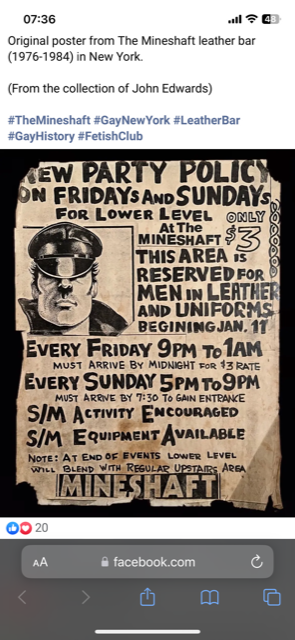
In the autumn of 1976, the birth of a bold experiment in the cultural and sensual liberation of gay males took shape in the form of The Mineshaft at 835 Washington Street, nestled deep within Manhattan's Meatpacking District. The club’s visionary, Wally Wallace, sought to carve out an atmosphere that was unlike anything seen before—an environment that was as immersive as it was rebellious. Keen on setting a defining tone, Wallace reached out to REX, whose burgeoning reputation for evocative leather illustrations promised something both striking and subversive. This collaboration yielded a visual icon: a muscle-bound figure, clad in nothing but a miner’s hardhat and a leather harness, holding aloft the club's bold logo. This image resonated immediately, capturing a blend of masculine allure and unapologetic rawness that spoke directly to the transgressive spirit of the times.
The impact of REX's Mineshaft design was profound and immediate, its influence rippling well beyond the dimly lit corridors of the club. As T-shirts and posters found their way into the eager hands of patrons and collectors, the design became more than just merchandise; it was a badge of identity in an era when such open displays were acts of both pride and defiance. Notably, when rock icon Freddie Mercury donned a REX-designed shirt in Queen's 1978 “Don't Stop Me Now” music video, REX's work transcended the subculture, introducing the provocative imagery to a global audience. By aligning his art with iconic figures, REX successfully injected the visual language of The Mineshaft into the cultural lexicon, ensuring its legacy.
Over the years, REX's continued contributions to The Mineshaft established him as the unofficial custodian of its visual identity. Each subsequent poster he created, with its ever-commanding portrayal of hyper-masculine miners, deepened the club's branding and broadened REX's artistic narrative. These images stood symbolically at the intersection of pleasure and power, encapsulating a community's quest for visibility and freedom. In defining the aesthetic of The Mineshaft, REX cemented his role as a key architect in crafting the cultural mythology of the 1970s gay liberation movement, one that celebrated not only the hedonism of the era but its resilience and creativity in the face of mainstream disregard.
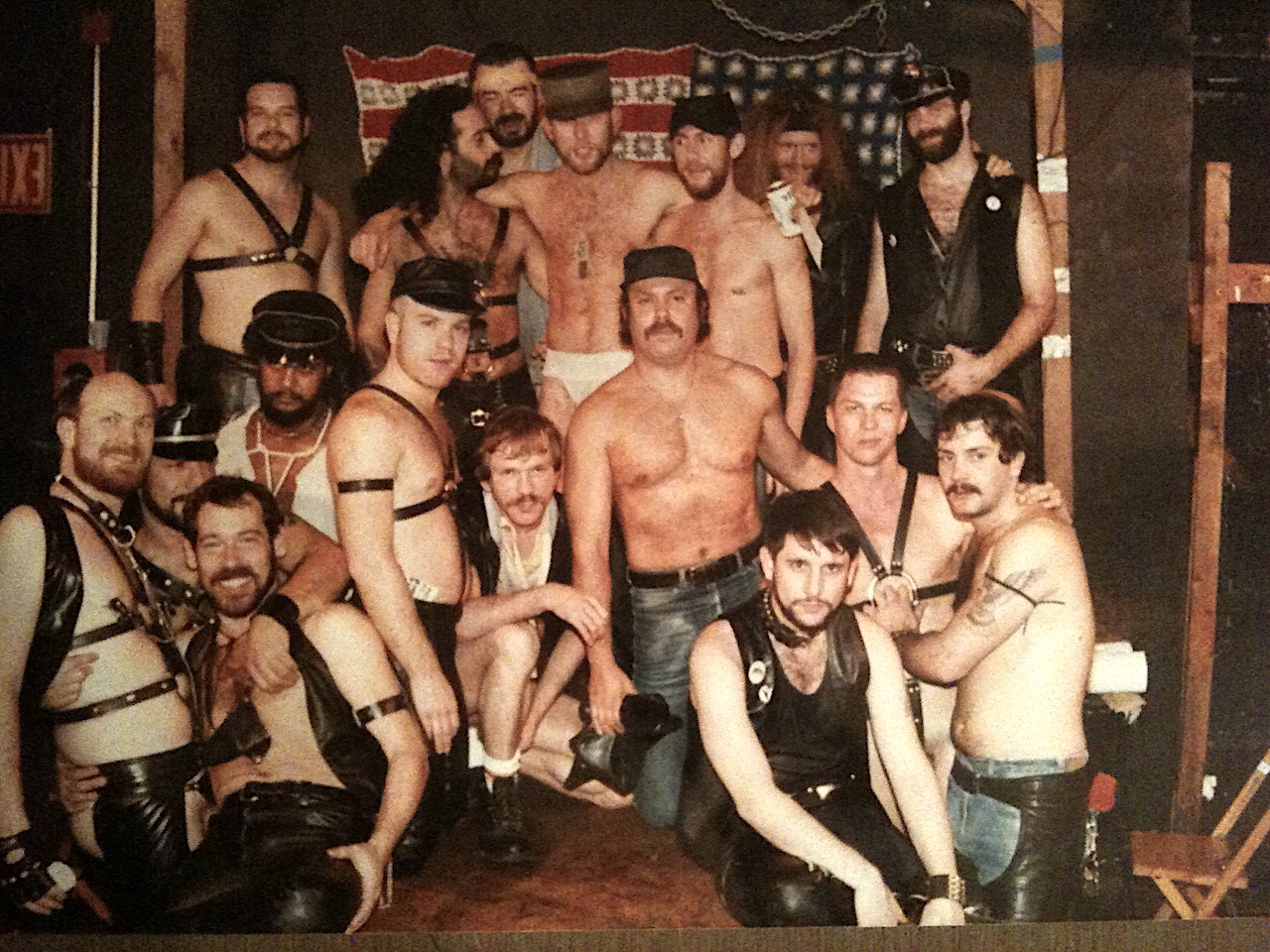
The Mineshaft swiftly ascended to an iconic stature within the gay subculture of the 1970s, forging a near-mythical presence that resonated far and wide. Its allure was not immediately apparent, concealed as it was in the labyrinthine shadows of a loading-dock alley, where unassuming passersby would never suspect the existence of a space so radically vibrant and defiant. As a nocturnal haven, open only to men and commencing its revelries after the witching hour, it thrummed with the energy of release—a consummate playground of hedonistic indulgence. Here, within its walls, societal norms were not just questioned but entirely dismantled, giving rise to a community bound not by silence but by shared experience and the pursuit of liberated joy.
The club's legendary status was firmly cemented by its philosophy of uninhibited freedom, a concept both revolutionary and quintessentially aligned with the post-Stonewall zeitgeist. This ethos invited men who had too long been shackled by societal repression to not only embrace but revel in their desires. Spanning nearly a decade, the Mineshaft was orchestrated by the watchful eye of Wally Wallace, who curated an experience akin to the Roman bacchanalias of antiquity—a temple to the body's pleasures where every man could lay bare his identity and explore orientations as variable and unconfined as the patrons themselves. In its embrace of the forbidden, the club became a living artwork in the drama of human sexuality, a place where the night's festivities were more ritual than recreation.
Yet, beyond the frequent nocturnal migrations of those seeking their slice of transcendence, the Mineshaft also represented a profound shift in how sex and ritual were perceived. It was a crucible in which the closeted and newly liberated alike were not only encouraged but challenged to experiment—a sanctuary where the hesitations of yesterday were stripped away like so many discarded garments. Here, among strangers turned kin, men shed more than inhibitions; they shed layers of societal dictate, choosing instead a collective narrative of trial and transformation. In its notorious heyday, the Mineshaft did not just echo with laughter or passion but resounded with the unmistakable declaration of autonomy and communion, marking an indelible chapter in the history of escapism and empowerment.
Within the clandestine corridors of the Mineshaft lay an intricate and deliberately mysterious tableau—an ever-shifting labyrinth of rooms, stairways, and alcoves, dimly illuminated by the flickering glow of red bulbs that cast shadows as vivid as the fantasies within. The club was a testament to absolute liberation, a multi-layered maze where every corner cradled a potential for discovery, and every encounter promised transformation. Here, the luxury of anonymity met the thrill of unreserved authenticity, each space reverberating with the sounds and echoes of bodies in motion, free from the gaze of a censorious world. The air hung heavy not with music—the volume kept deliberately low—but with a symphony of shared intimacies: the slurps, the moans, the rhythmic crack of whips on skin—a concert of communion that needed no lyric or melody.
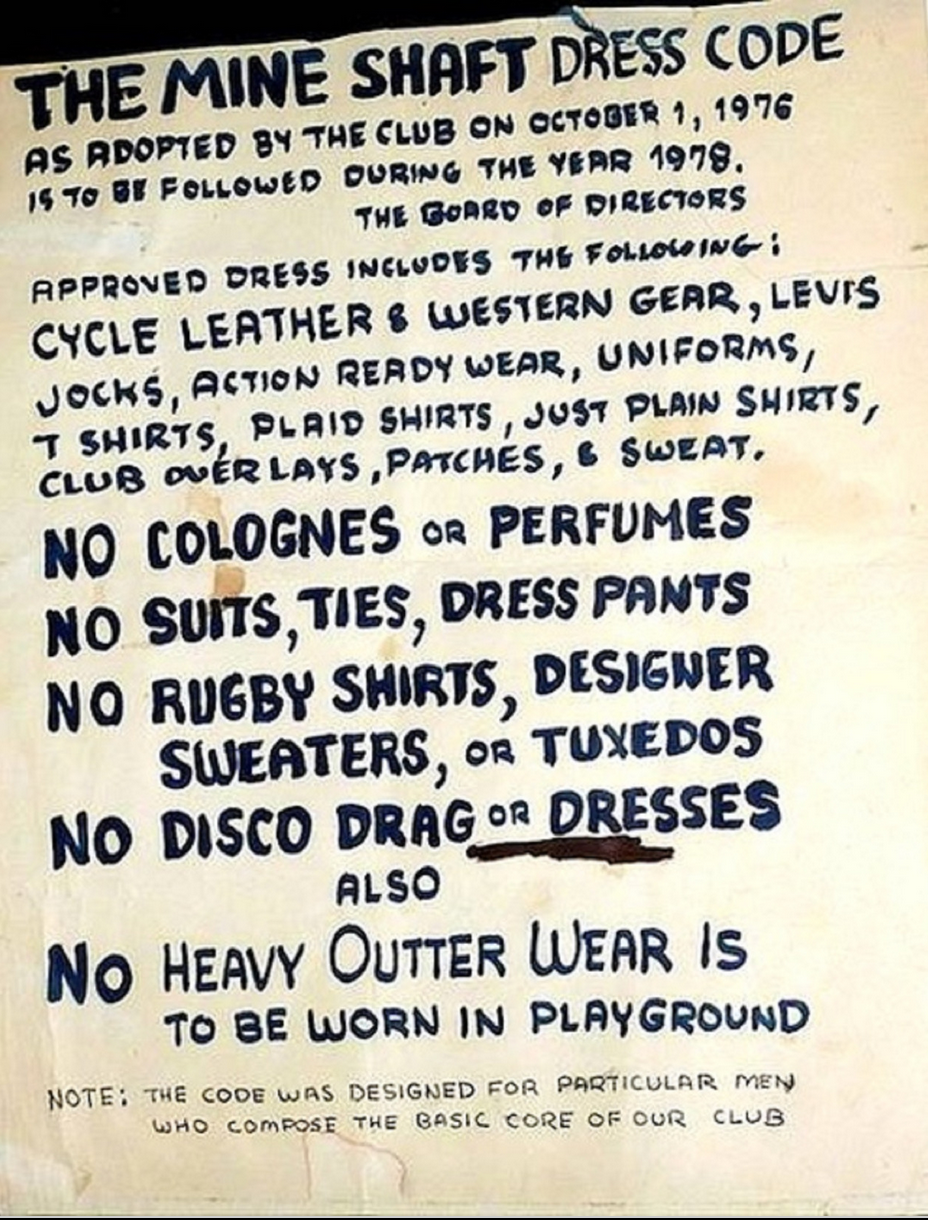
The dress code was a gatekeeper of its own, an explicit harbinger of the masculine fetish utopia within. Gone were the gleaming suits and sequined costumes of disco; in their stead, uniforms of primal expression took stage. Leather, workman's attire, and uniforms were not merely costumes but ritual garb, articles that spoke as much to identity as to desire. The coatroom stood as the final relinquishment, an invitation to leave societal roles at the door, to strip down to the essentials of self—a metaphorical and literal shedding that dissolved pretense into the club’s core ethos: unabashed acceptance.
The Mineshaft thrived on its ability to orchestrate themes that transformed nights into spectacles and rituals. In this underground sanctuary, each day heralded a unique celebration of male camaraderie and carnal artistry. Mondays honoured the athletic anonymity of Jockstrap Night, where bartenders in gym jocks served as co-conspirators in the night's liberation. Tuesdays brought the thrill of combat with live wrestling matches, reflecting the raw, competitive nature of its patrons. Thursdays descended into the spirited waters of ‘Water Sports’ nights, immersing participants in an aquifer of unabashed indulgence.
Among the many facets that typified the Mineshaft’s culture, perhaps none was more symbolic than the quiet exchange of Crisco shortening at the bar—a single, silent transaction rife with implication and mirth. This ritual act, where a patron’s open palm met the bartender’s scooping hand, seamlessly encapsulated both the outrageous extremes of the club’s erotic practices and its unabashed humor. The sight of glossy Crisco, intended to facilitate such notorious activities as fisting, not only ridiculed propriety but also embraced a raw, heartfelt honesty that permeated the Mineshaft’s walls. In this microcosm of unrestrained male intimacy, lubricity extended beyond the physical, seeping into the cultural ethos, softening boundaries, and deepening the connections between patrons.
Despite the wild and untamed reputation that preceded it, the Mineshaft maintained a surprisingly cohesive and protective structure under the guidance of Wally Wallace and his dedicated staff. The club emerged as a haven where expression, even when extreme, was couched within a framework of safety and care. Wallace and his team took their work seriously, ensuring peace through a meticulous yet inconspicuous oversight. Rules were posted strategically, IDs meticulously checked, and anecdotes circulated of a doctor and psychologist being on call for newcomers to aid in their immersion into the Mineshaft's realms. This playful ‘School for Lower Education,’ advertised in newsletters, was emblematic of the club’s commitment to nurturing an environment where liberation and security coexisted.
Regular patrons discovered within the Mineshaft a sanctuary of protected freedom, a condensed cosmos where the pressures of daylight did not penetrate. Here, identities could be shed as easily as clothing, left at the threshold to be reclaimed as one exited back to the outside world. The Mineshaft enticed members with the promise of a descent into an underworld, an invitation to explore the recesses of the Id, unencumbered and truly alive. The club’s very foundation rested on a paradox—structured debauchery, chaotic sanctuary—a duality mirrored in its ability to engender intimacy amidst anonymity, creating bonds that were as solid as they were fleeting, reflective of the ephemeral yet powerful connections forged in the dimly-lit rooms of this mythic enclave.
Within the labyrinthine halls of the Mineshaft, REX found an unparalleled synergy between observation and participation. The club, a living canvas for his imagination, became both his muse and refuge. On any given weekend, REX could be encountered amidst the thrumming energy of the Mineshaft, sometimes assuming roles at the door or bar—small tasks that ensured his passage into this nocturnal domain remained unbarred and his creative thirst, quenched. This immersion fed not only his artistic output but his very soul, offering an unending tableau of human drama from which to draw inspiration. Among the smoky shadows and rhythmic heartbeats, REX's pen traced the contours of a world at once raw and unabashed.
His illustrations distilled the essence of the Mineshaft, their pages brimming with the club’s sinewy intensity and hyper-masculinity. They were more than images; they were incarnations of the club's ethos—the Mineshaft Man, as captured through REX’s discerning eye and ink-stained hands. It was natural that Wally Wallace selected him to encapsulate the club’s spirit; his drawings bridged fantasy and reality with unapologetic clarity. Each stroke on REX's posters whispered the untold tales of liberation and indulgence, capturing the nuanced dance between desire and freedom that defined the Mineshaft.
As REX expanded his visual lexicon following the success of his first poster, each subsequent piece pushed deeper into provocative terrain. These creations didn't just decorate the Mineshaft—they shaped its identity and allure. By the time William Friedkin sought to represent the club's ambiance in 1980’s Cruising, REX’s work had already etched itself indelibly into the Mineshaft’s legend. His posters, layered in the movie’s backdrop, brought the aesthetic of gritty, black-and-white sleaze into sharper view for a worldwide audience. “The Shaft is a fantasy by REX,” a contemporary observer noted in Drummer, capturing how thoroughly his art not only mirrored but magnified the Mineshaft’s mythos, framing it as a tactile dreamscape where the limits of identity and artistry were continually redrawn each night.
In the depths of the Mineshaft's shadowed corridors, REX encountered kindred spirits navigating their own explorations of identity and expression, chief among them a young Robert Mapplethorpe. Both men arrived at this subterranean sanctuary from ostensibly conventional beginnings, yet driven by the itches of creativity and liberation. In each other, they recognized the influence of their respective New York patrons, seeing in those benefactors both the gateway to wider artistic acceptance and the challenge of expectations that came with societal backing. The Mineshaft, in its role as a crucible of experiences, offered astonishment and opportunity, though it welcomed them with varying levels of engagement.
Mapplethorpe, ever the fastidious observer, wielded his camera with the precision of a surgeon—his lens a barrier as much as an enabler. His presence in the Mineshaft was marked by an almost clinical detachment, a silent chronicler amid the rites taking place around him. Through his camera, he captured scenes that would later provoke thought and conversation, illuminating the clandestine corners of gay culture with a dispassionate clarity. He was there to see, but not to be seen—a figure perched on the periphery, framing the fervor without becoming consumed by it. To REX, this placed Mapplethorpe in a realm of creative isolation, producing art from observation rather than participation.
In contrast, REX was fully immersed in the throes of the environment, integrating his reality with the fantasies unfurling before him. His vantage point was not one of distance, but one of involvement—his artistry born not just from what he observed, but also from what he lived. Where Mapplethorpe's photographs rendered their subjects into sculptural, polished forms, REX’s illustrations dripped with the rawness and authenticity of direct experience. He found art in the textures as well as the textures of life in the Mineshaft, and saw Mapplethorpe’s subjects less as men than as aestheticized symbols, their humanity veiled by composition and control. To REX, the essence of the Mineshaft transcended the stoic imagery captured in Mapplethorpe’s frames, existing instead in the chaotic beauty of a world lived openly and fervently.
In stark contrast to the detached precision of Mapplethorpe, REX's art sprang from the depths of emotional and physical engagement. His creations, meticulously executed with the obsessive precision of stippling, transcended mere documentation to become dynamic topologies—blueprints of desire etched straight from the heart of lived experience. REX did not just capture reality; he conjured it, constructing scenes with foresight, each drawing an incantation of what could—or should—occur. Where Mapplethorpe's gallery pieces were framed for contemplation under controlled settings, REX's offerings were raw, intended for the gritty interplay of alleyways and dark corners—an invitation rather than merely an observation.
Mapplethorpe’s ascent in the world of high art marked him with the gravity of scandal—an ironic badge of respect in elite circles that both condemned and venerated his vision. Meanwhile, REX remained an unsanctioned voice, committed to the unfiltered eroticism that defied conventional polite tastes. His drawings amassed no mainstream accolades, but thrived in the underbelly where the rawness of encounters mirrored the honesty of his work. The art world may have overlooked him, but within that neglect, REX found a freedom that fueled his insistence on sincerity over acceptance, a path tethered more to fidelity than fame.
By the time their paths crossed once more in San Francisco during the tumultuous 1980s, the once-vibrant Mapplethorpe was visibly wilting under the weight of illness, rendering him a spectral presence of his former self. In their brief exchange, laden with unspoken histories, Mapplethorpe's nod became a gesture heavy with retrospective acknowledgment. As REX later recounted, there lay a stark epitaph to their artistic divergence: "I would never have given in as you did." Whether this statement stands as fact or fiction, it underscores the tangible divide between them. REX, embittered yet resolute, embodied the lived experience, while Mapplethorpe, even in his rebel aesthetic, had navigated an expedient concession. One had peered through the lens from a distance, the other had immersed himself fully into the life he exalted, testament to two artists united by subject yet separated by approach and consequence.
Obsession with the Gritty Underground: Flophouses, Bathhouses, and “Lone Wolves”
REX's artistic vision gravitated inexorably towards the shadowy fringes of urban gay life, where authenticity was unvarnished and visceral. While the Mineshaft was a beacon of 1970s liberation, REX was equally enchanted by the gritty venues of earlier decades—the flophouses, SRO hotels, and clandestine bathhouses that had long served as both sanctuary and meeting ground for outliers of societal norms. In his drawings spanning the 1960s to 1970s, REX meticulously illustrated scenes suffused with a melancholy beauty, set within the confines of transient hotel rooms and steel lockers, inhabited by drifters, hustlers, and solitary men navigating life's margins. This was, indeed, an homage to the uncelebrated and unadorned, a world scrappily resilient in its defiance.
The characters populating REX's art were vivid in their rugged realism: unshaven ‘lone wolves’ cloaked in jockstraps, leather, and battered apparel, flanked by sailors, Marines, and cops—all compatriots of the night traversing through interchangeable realms of fleeting encounters. To REX, these men were more than mere figures; they were the embodiment of life's raw edge, asserting a presence both proud and unrefined. His drawings captured not just their physique, but their essence, the ambiance of lives lived on the precipice of mainstream disdain. These creations were heartfelt portrayals of men whose stories unfolded on the stained mattresses of bygone rooms, where cigarette smoke spiraled into the air, a silent testament to whispered truths.
The intimate details did not shy away from the gritty reality of these scenes—a challenging yet compelling realm marked by stained mattresses, graffiti-clad stall doors, and corridors echoing with quiet claims of identity and desire. Acknowledging the ragged kaleidoscope of urban narratives, REX eschewed polished veneers, opting instead for the poignant realism found in what society deemed 'seedy.' Here lay his rebellion against the gloss he scorned, an embrace of the authentic experiences that underscored life’s layered complexities. His prolific depiction of the flophouse encounter was not merely creative indulgence; it was a statement that proclaimed dignity amid degradation, beauty amid perceived squalor—a testament to his belief that art flourished amid the authenticity of unvarnished realities.
At the heart of REX's artistic philosophy was a provocative theory that redefined traditional perceptions of masculinity through the concept of dirt as a cosmetic. To REX, grime was not merely a byproduct of masculinity but an intentional adornment, akin to makeup's role in enhancing femininity. Dirt, within this framework, was imbued with significance—it marked the labor, experience, and resilience that constituted a man's authenticity. The men populating REX's drawings, frequenting the Mineshaft, or haunting the dim alcoves of flophouses, wore their grime with pride; it was an emblem of lives fully lived and unvarnished. This deliberate embrace of the unwashed body, stained attire, and well-worn boots served to underscore a raw, unyielding form of manhood.
In REX’s conception, the grit that clung to these men served as validation rather than defamation. Their hardened exteriors, marked by sweat and labor, testified to a reality untouched by superficial glamour. This appreciation of coarseness revealed an aesthetic that was resolutely tactile: manhood was neither refined nor polished but layered with the granular texture of sandpaper and overshadowed by the visceral scents of sweat, grease, and smoke. These elements, intertwined with the physicality of the male form, projected masculinity as a sensual experience grounded in the earthiness of existence. The surface imperfections were not flaws but attributes that articulated their essences.
In REX's nuanced world, embracing this form of visceral masculinity was nothing short of a revolutionary act. By capturing the roughness and strength in his artwork, he presented an alternative narrative that celebrated the unpolished truths of manhood. His work extolled the intrinsic beauty in the supposed imperfections and highlighted the courage required to claim such authenticity in a world often enamored with sheen. Through his lens, masculinity thrived in its ruggedness, a statement laden with complexity and defiance, reflective of REX’s own journey through the intersections of art, identity, and societal norms.
In a rapidly changing cultural landscape where the commercial gay aesthetic began to favor sanitized beauty with its sleek, polished forms, REX positioned himself defiantly apart, favoring an authenticity that embraced imperfection. His vision clashed with the vogue for clean lines and waxed torsos, anchoring his art in environments where the practicality of labor eclipsed superficial form. The men of REX’s imagination and sketches were not denizens of nightclubs or fashion editorials, but rather inhabitants of garages, loading docks, and utility rooms—settings resonant with purpose and the hum of work. These were spaces where actions spoke louder than words, places where skin met steel and sweat mingled with sawdust in a testament to a life fully lived and unshielded.
REX’s aesthetic was a conscious or unconscious homage to a lineage rich in historical and cultural resonance, one that might have found kinship with the likes of Walt Whitman. His representations captured men in their dual states of labor and leisure—forms engaged in fellowship and physicality, exuding a robust and undeniable presence. In this world, physical prowess was celebrated as a natural continuation of life’s expressive canvas. Here, the act of work flowed seamlessly into intimate acts of connection. The bodies he rendered were intensely real, embodying sex not as a distinct act but as the culmination of life’s ongoing exertion, a natural extension manifest in rooms filled with the authenticity of straining effort and robust endurance.
Through his depiction of men grounded in their daily existence, REX projected a vision of eroticism invigorated by the grit and mechanics of male life. He offered a narrative in which the earthy patina of sweat and labor was not merely a backdrop but an intrinsic component of the erotic experience. His art depicted a charged realism where physical exertion and sensual release intertwined, advocating for an acceptance and appreciation of male beauty in its most unrefined and enduring form. This approach not only challenged prevailing trends but enriched the tapestry of gay cultural expression with a depth resonant of unfiltered, visceral truth.
In the throes of the late 1960s, New York City was a city of contrasts, its architectural tapestry interwoven with the unassuming presence of flophouses and single-room-occupancy (SRO) hotels. These edifices, humble in their façade, offered more than shelter; they represented a transient home for many souls navigating the city's sprawling anonymity. Particularly in areas like the Bowery, the West Village waterfront, and Times Square, these lodgings became the sanctuaries of life's drifters—those passing through or paused at life's uncertain crossroads. For gay men of the era, these spaces bore a complex duality: they provided both a clandestine refuge and a stage where brave living flirted with concealment.
Against this backdrop, flophouses emerged as covert arenas of acceptance and exploration. In the shadows cast by societal scrutiny and police harassment, they offered a semblance of privacy, a shielded haven where men could connect away from prying eyes. These venues allowed gay men, as well as drag queens, to cruise along the Christopher Street waterfront, then retreat with anonymity into the intimacy of the squalid rooms, engaging in encounters both fleeting and profound. In these nests of solitude, moments of genuine connection could spark amid the peeling paint and the subtleties of whispered secrets. Here, a new kind of relationship could flourish—one unencumbered by the judgment of daylight, where shared vulnerability created a bond as tangible as the iron bed-frames that lined each room.
For REX, these flophouses were not just physical locations but wellsprings of inspiration, deeply resonating with his penchant for the clandestine and unembellished. The raw authenticity of these interactions nourished his creative instincts and imbued his sketches with life. Whether as a temporary resident, an observant onlooker, or a curious artist lost in the atmospheric absorption, REX etched the vivid pulse of these rooms onto paper. His early drawings, rendered long before he adopted his artistic moniker, captured the essence of these moments: men engaged in the passionate dance of intimacy, framed by the sparse aesthetics of their iron-bound surroundings. Decades later, critics recognized the echoes of Jean Genet's gritty prose within REX’s works, an acknowledgment of their shared exploration of desire and identity within the textured margins of society.
Just as the New York flophouses played a pivotal role in REX's artistic milieu, the gay bathhouses provided an equally compelling canvas. These establishments, steeped in history and tradition, stood as bastions of privacy and communal intimacy for gay and bisexual men seeking a refuge from the prying eyes of the outside world. Bathhouses like the renowned Everard Baths or the St. Mark’s Baths in New York emerged as sanctuaries where one could embrace both companionship and clandestine encounters. With their labyrinthine passageways, private cubicles, and communal spaces, these venues were designed to offer more than just escapism—they provided camaraderie and a pixelated community viewed through the lens of steam.
Within these sauna-strewn halls, REX discovered rich sources of inspiration, his artistry capturing the nuanced interplay between the desire for anonymity and the craving for connection. Historians like George Chauncey have highlighted the role of bathhouses as safe havens—environments policed by in-house security that managed to foster a community spirit while ensuring seclusion. They became life rafts for married and closeted men who ventured into this realm seeking the anonymity they couldn’t find elsewhere. For many, these retreats offered not just promiscuity but initiation into the broader gay community, a gateway to a world otherwise unreachable. Through his art, REX encapsulated these juxtapositions, painting the anonymity that paradoxically generated a sense of belonging.
By the time the 1970s rolled in, the transformation of New York’s bathhouses mirrored the broader revolution happening within gay culture. What began as utilitarian refuges evolved into dazzling mega-clubs like the Continental Baths, which melded hedonism with high-octane artistry and performances. Yet, underneath the glamour of disco lights and celebrity appearances lay the authentic atmosphere that first drew REX: the gritty allure of steam-filled nooks where towels lay forgotten, the scent of chlorine mingled with musk, and the constant undercurrent of voyeurism provided endless potential for chance encounters. This was a world where REX felt at home, his art capturing the hazy intersection of spectacle and sexuality, using the bathhouse scene as a backdrop to depict the visceral realization of identities forged in steam and shadows.
In the tapestry of his artistic journey, REX's admiration for the gay bathhouse culture stood out boldly, his art unapologetically embracing the vitality and community found within these tiled sanctuaries. During the late 1970s, when parts of the gay media aimed to present an image of respectability sequestered from overt sexuality, REX’s illustrations in publications like Drummer magazine reverberated with an unapologetic celebration of eroticism, steeped in the steamy allure of bathhouse orgies and intimate shower encounters. He meticulously illustrated every detail—the damp tiles, rows of lockers, and the casually discarded flip-flops and towels—incorporating them with the same affectionate attention as the men who engaged in the activities these spaces were designed to foster.
The artworks were not acts of defiance but odes to unbridled joy, elevating the bathhouse experience to a form of camaraderie and shared human intimacy. A drawing from 1978, aptly titled “Barracks,” captured this essence through a sprawling scene of intertwined bodies within a bathhouse bunk-room setting, emblematic of places like the Everard Baths—an establishment affectionately referred to as “Everhard Baths” for its unabashed atmosphere of cruising and connection. These images commemorate a period when gay men, freshly liberated, found spaces to congregate openly and engage in sexual communion, their desires met with shared enthusiasm rather than clandestine whispers.
In REX's renderings, one finds a historical testament to an era punctuated by a pre-AIDS exuberance—a time when the bathhouse was a haven of not just anonymity but jubilant exploration. The frankness of his portrayal, unyielding to the pressures for sanitized depictions, serves as an indelible mark of truth and celebration of the authentic gay experience during a period imbued with transformative significance. His work reflects not only the physical spaces but the palpable ethos of liberation and possibility that animated these gatherings, firmly situating REX as both a chronicler and celebrant of a particular chapter in LGBTQ history, immortalized in ink.
By the close of the 1970s, REX West stood as an indomitable figure within the audacious realms of the gay sexual underground, his art a vivid chronicle of environments that thrummed with forbidden allure. From the illicit whispers of tearooms and the haunting echoes of piers during the ’60s, to the unabashed throbbing of night within leather bars, bathhouses, and backroom clubs of the ’70s, REX traced a cartography of desire and defiance. To outside observers, his focus on flophouses and bathhouses might have appeared arcane or distasteful—mere margins of societal norms. Yet for insiders, REX illuminated a profound truth within gay life, articulating with precision the beauty and symmetry in what might be dismissed by mainstream observers as mere sleaze.
REX's artistry, alongside visionaries like Tom of Finland, engendered a seismic shift, elevating what was once labeled mid-century pornography into the celebrated realm of art. Through his drawings, REX did more than portray desire; he sculpted it, capturing the myriad complexities inherent within gay expression. His works refused sanitization or dilution, embracing the challenging dimensions of real gay desire with unflinching candor. REX’s declaration that his art embodied his truth, asserting no existence beyond what he chose to depict, was not mere bravado but a philosophical stance. In his hands, raw depictions of gritty settings became studies in authenticity, redefining beauty and eroticism with a lens unapologetically fixed on reality.
The "truth" REX chose to champion was unpolished and genuine, a stark reflection of horny men amid atmospheres dense with unrefined allure. These were scenes where desire flowed as freely as the smoke-filled air, where eroticism thrived not despite but because of its sleazy contexts. By foregrounding such scenarios, REX did not merely court controversy; he ventured a dialogue on the transformation of stigma into splendor, challenging conventional mores and beckoning a reconsideration of what constituted the beautiful. Through his art, REX endeared himself to an audience that found both validation and empowerment within the rebellious honesty of his creations, crafting a legacy steeped in the raw vigor of unapologetic acceptance.
Rising Fame in the Late 1970s
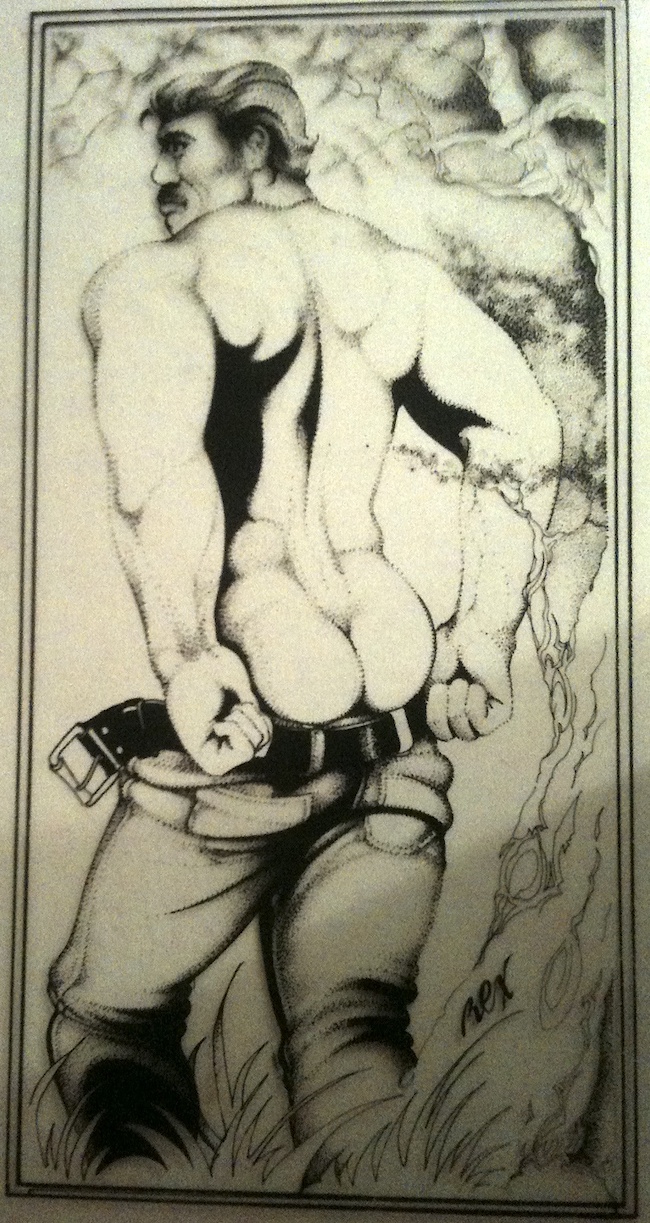
As the 1970s progressed, an evolution marked REX's artistic journey. Where once he toiled in the shadows of semi-obscurity with pornographic publishers, by the latter part of the decade, his name started garnering a more consistent recognition within the gay community. This acknowledgment was catalyzed in 1977 when REX joined the contributors’ circle at Drummer magazine, the pioneering leather S&M publication that had migrated from Los Angeles to the vibrant avant-garde culture of San Francisco. Under Drummer's aegis, his dynamic art found an expansive audience, captivating thousands on both the East and West coasts of the United States and extending across the Atlantic to Europe. REX's work became a staple of the magazine, his provocative imagery crackling with an aggressive eroticism that engaged readers instantly, compelling them to return to his work issue after issue.
Drummer magazine served as a pivotal platform, showcasing REX's intricate graphical style and his unfettered exploration of overt sexual aggression. His ascent in popularity was crystallized in April 1978 when the Fey-Way Gallery in San Francisco—a beacon for avant-garde gay art—hosted REX's first solo exhibition. Aptly titled “Corrupt Beyond Innocence,” this display of artistry captured his essence unequivocally. Gallery-goers, among them illustrious figures like Robert Mapplethorpe, were greeted by the unmistakable force of REX's vision: beautifully raw male physiques, captured in states of gritty, tactile realism. The very essence of his flophouse-inspired sketches came alive, where his subjects lounged upon soiled mattresses, exuding physical charisma tinged with undertones of urolagnia or shifting dynamics of master and slave.
The San Francisco art crowd, daring in spirit yet still unprepared for the sheer intensity of REX's interpretations, found his exhibitions both disconcerting and enthralling. REX's work was at once a direct challenge and an invitation, pushing the limits of what gay art could express, offering a new dimension that beckoned audiences to acknowledge not only the surface reality but the deeper truths of desire they encapsulated. One keen observer, a notable figure in the community, christened REX as the “artist of urban sleaze,” a title imbued with reverence and admiration. This characterization captured REX's prowess in stretching the canvas of gay art to accommodate visceral depths and complexities that few had dared to depict, thereby establishing him as a luminary who transformed the conversation around art and sexuality.
By the cusp of 1979, REX’s career had intensified into a flourishing endeavor marked by both critical recognition and underground acclaim. Having previously published “Mannspielen”—a provocative portfolio anthology celebrating homoeroticism through the unapologetic lens of “Man Games”—he continued to cultivate his influence with the release of the “Icons” series in 1977. Though the explicit nature of these portfolios relegated them largely to mail-order ads within S&M newsletters, bypassing the reticence of mainstream bookstores, they nonetheless succeeded in reaching an audience of discerning collectors passionate about authentic and raw artistic expressions.
The late 1970s were a period of expansive creativity for REX, not limited to his portfolio work. He began exploring commercial projects that echoed his unique style, such as a poster for The Pleasure Chest erotic boutique in 1976, indicative of his expanding reach into the realm of advertising. Notably, REX ventured into branding for BOLT, contributing a series of provocative poppers advertisements that captured the zeitgeist and energized his reputation within the scene. His presence in both New York and San Francisco underscored his burgeoning status, as he established alternating bases in each city's vibrant districts: the Meatpacking District in New York and SoMa in San Francisco.
By maintaining a robust presence in San Francisco’s South of Market district, REX embedded himself in the West Coast’s nucleus of leather culture—a counterpart to New York’s own gritty epicenter. With each visit, he deepened his connections within this community, finding fertile ground for his creative explorations among the district’s leather bars and bathhouses, which mirrored his beloved New York settings. Through exhibitions in San Francisco galleries, his work continued to resonate powerfully within the cultural fabric of the city, solidifying his influence across the American landscape. REX’s bicoastal ventures not only broadened his artistic impact but simultaneously cultivated a bridging of divergent cultural vibrancies within the world of gay fetish art.
As the curtain fell on 1979, the retrospective gaze reveals an artist who had irreversibly sculpted his identity from the unassuming roots of a Connecticut upbringing to that of a revered figure on the international fetish art stage. REX West, through a deft embrace of the subversive and taboo palettes of gay existence, wielded his talent with both stark realism and an undercurrent of jubilant affirmation. The inks that flowed from REX’s pen did not merely depict scenes; they immortalized them, infusing places like the enigmatic New York Mineshaft with an aura as visceral and unyielding as his drawings themselves. REX's influence stretched beyond singular locations into the burgeoning leather subculture, shaping its aesthetic lexicon and solidifying its archetypes: the rugged Mineshaft Man, the lone trucker, the rebellious roughneck, and the biker resplendent in a backroom sling.
This transformation of gritty real-life personas into a celebrated visual vernacular extended beyond mere homage. It offered those within the community a mirror through which to see their defiance reflected and celebrated in a society that often looked askance. As one cultural commentator wryly noted, "If you get off on REX, you’ll like The Mineshaft," capturing the inseparable kinship between REX’s art and the spaces it adorned. By 1979, his hallmark vision had become an interpretive lens through which the gay subculture experienced its own dimension of erotic possibility—each leather bar visit, each bathhouse encounter, whispered with the shadows and shapes REX had so indomitably set to paper.
REX reframed what society often relegated to the peripheries into a canvas of undeniable allure, fostering a domain where sex and identity intertwined seamlessly amid the city’s secretive alcoves. His illustrations were more than mere portrayals; they were celebrations, pushing boundaries and carving spaces for exploration and self-realization. Under REX’s guidance, the community saw itself as he rendered it—rich, defiant, and oozing with life—a tribute that forever redefined the visual language of an era and its underground subculture.
As the calendar tipped into the 1980s, REX stood on the precipice of a decade fraught with looming adversities and transformations. The dawning era promised trials unlike any faced before: the emerging shadow of the AIDS crisis threatened to subdue the vibrancy of the subcultures REX had so passionately celebrated, wrapping communities in layers of fear and anguish. Simultaneously, an encroaching mainstream backlash sought to push back against the bold expressions of identity forged in the previous decade, threatening to silence the very narratives REX had strived to amplify. Amidst these external pressures, REX made the personal decision to embark on a self-imposed exile from America, a move that held both retreat and renewal.
Yet up until the close of 1979, REX's journey was defined by the exhilarating crest of uninhibited creative triumph. Within the charged ecosystem of the underground gay culture, he did more than just document life—he magnified and co-created it. Through his artwork, REX uplifted the hard-edged experiences of gay men living on society's fringes, transforming their struggles and passions into darkly beautiful art. His illustrations told continuous tales of resistance and longing, each image meticulously crafted in ink, built dot by dot into a tapestry of emotional and physical authenticity.
REX's artistic endeavors were more than a personal odyssey; they were testimonies etched in stark contrast, reflecting a narrative of defiance against repression and an embrace of desire unchained. His works depicted not only the erotic allure but the inherent dignity within lives lived beyond the mainstream spotlight. Under REX's hand, the marginalized were cast into the light, celebrated for their unabashed authenticity. As society braced for change in the 1980s, REX's legacy stood as a bold reminder of the artistry and vigor that thrived in the cracks of convention, offering visions of both melancholy and majesty that lingered long past the final stroke of his ink.
Setbacks and Resilience in the Early 1980s in San Francisco
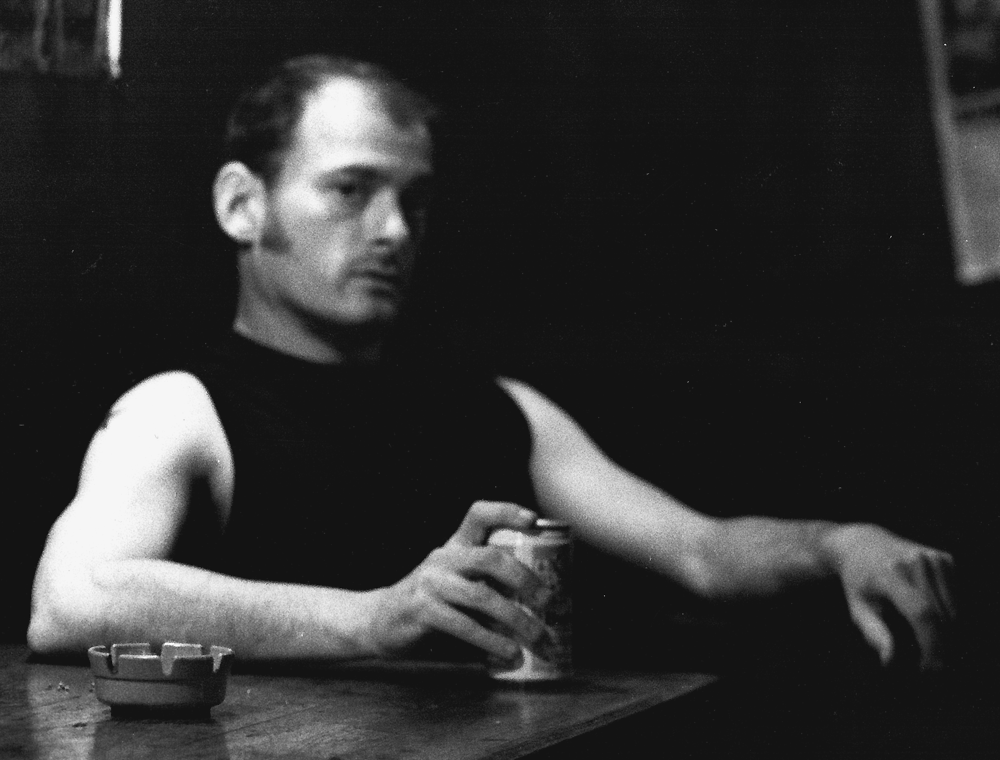
As the 1980s approached, REX stood at the pinnacle of his career, his provocative fetish art earning him a devoted following within the underground artistic landscape. The culmination of this acclaim was his solo exhibition at San Francisco’s Fey-Way Gallery in April 1978, founded by the daring and enigmatic Robert Opel. This gallery, a beacon for erotic art, served as the perfect venue for REX to display his boundary-pushing creations, marking a significant milestone in his rise within the gay art scene. The exhibition represented both a celebration and a rallying cry, establishing REX not merely as an artist of the fringe but as a central figure in the tapestry of queer artistic expression.
Yet, even as REX basked in this newfound visibility, tragedy lurked in the shadows. On a fateful day in July 1981, catastrophe struck. A massive fire tore through San Francisco’s Folsom Street leather district, consuming REX's newly-established studio and gallery on Hallam Street, a venture he had launched with hopeful anticipation only days prior. The flames devoured his original drawings overnight, annihilating years of laborious creativity in a cataclysmic event that left REX reeling in the wake of profound loss. With the incineration of these tangible pieces of his artistic soul came an incalculable personal crisis, tearing at the very fabric of his life's work.
The aftermath of the fire was a crucible for REX, forcing a painful confrontation with both devastation and identity. The blaze had obliterated more than his physical artwork; it had seared through his sense of purpose and continuity. This personal crisis plunged him into a period of introspection, as he grappled with the fragility of creation and the impermanence inherent in the pursuit of art. In the midst of this tragedy, REX’s resolve and resilience were tested, challenging him to redefine his path in a world where the shadows of loss danced persistently at the edges of hope. The journey that followed would redefine not only his art but his very essence, shaping the narratives he would create in the years that lay ahead.
In the aftermath of the devastating fire, a testament to the enduring bonds of the leather community emerged as they rallied to lift REX from the ashes. The infamous Mineshaft club orchestrated a series of supportive benefit events, aptly dubbed 'Casino Night,' both in San Francisco and New York City, underscoring the depth of communal solidarity. These benefits served as more than just fundraisers; they were expressions of camaraderie and a shared belief in REX's indomitable spirit. The proceeds enabled him to secure a modest refuge—a tiny one-room squat at 199 Valencia Street, perched above the Rainbow Cattle Company, a biker/leather bar emblematic of his community's gritty yet warm embrace.
Despite this lifeline, the trauma from the fire, compounded by the parallel emergence of the AIDS crisis, cast a long shadow over REX. Entwined in the threads of grief and despair, he withdrew into his shell, retreating from the world and withholding his artistry for nearly a year. This period of profound depression marked a heartbreaking silence, a pause reflective of the turmoil churning within him and the world at large. Friends could only watch as REX grappled with his demons, waiting for the cathartic moment when he might once again touch pen to paper.
That moment arrived in late 1982, when REX, embodying the resilience of a true artist, tentatively rekindled his creative flame. In this resurgence, his first significant post-fire work fittingly bore the title “Phoenix,” symbolizing rebirth and the indomitable nature of the human spirit. This illustrative triumph was not merely an act of personal healing but one of communal generosity, as REX raffled the piece to fund AIDS (Kaposi’s Sarcoma) research. The drawing not only heralded his return but also graced the cover of his Paris-published art book Rexwerk in 1986. REX's journey, from the depths of a year-long creative inertia to his phoenix-like resurrection, stood as a robust affirmation of his endurance and an artist's perpetual cycle of creation, destruction, and rejuvenation.
Commercial Commissions: Leather Shops and Bar Posters
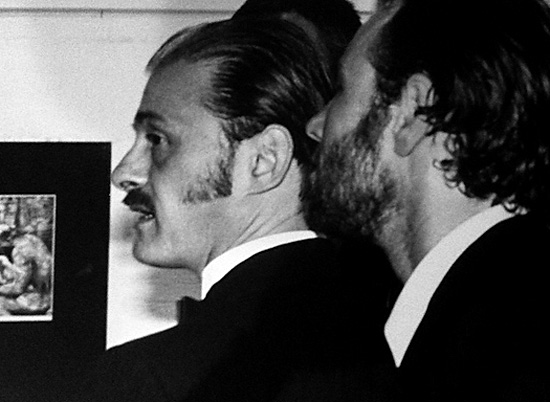
In the fragile context of the 1980s, REX managed, with characteristic resilience, to carve out a modest yet crucial income stream through commissions that tapped into the vibrant local leather scene of San Francisco. A central pillar of support came from A Taste of Leather, one of the city's pioneering leather and fetish stores, renowned not only for its iconic location above Febe’s bar on Folsom Street but for being a staple of the community’s sartorial culture since 1967. In 1980, REX's prowess with ink found a fitting outlet as he was enlisted to illustrate their product catalog, an opportunity that allowed him to render fetish wear and leather gear with the same meticulous craftsmanship that characterized his broader body of work.
The economic gains from these projects were modest yet pivotal, providing REX with a reliable source of income that kept him intricately connected to the community he so vividly depicted. In 1981, he produced the REX Calendar, a visually compelling wall calendar that featured twelve pieces of his erotic drawings, also serving as a subtle advertisement for each of his collaborative ventures with A Taste of Leather. This calendar, hanging in the personal spaces and communal venues of the scene, ensured REX's continued presence within the cultural milieu he cherished.
Among REX’s fruitful collaborations with A Taste of Leather, an iconic poster emerged, visually encapsulating the zeitgeist of Folsom Street's Golden Mile. REX illustrated a striking, leather-clad figure, exuding unapologetic masculinity as he leaned against a street sign marked “FOLSOM.” Complete with a biker cap, Sam Browne strap, and suggestively positioned finger, this hirsute, muscular diplomat of leather subculture became more than an image; it became an archetype—defining the sensual bravado of late-1970s and early-1980s San Francisco leather culture. Through this work, REX didn't just create a poster; he immortalized a moment, casting the conspicuous spirit of an era into the annals of queer history.
Beyond retail commissions, the call for REX's unique artistic touch extended deeply into the cultural fabric of San Francisco’s vibrant network of gay bars and clubs. During the late '70s and into the '80s, REX’s talents were in high demand, his work illuminating the promotional materials for iconic establishments. These venues included the legendary Black and Blue, known for its portrayal in Frances Fitzgerald’s "Cities on a Hill," and The Brig, San Francisco's premier stronghold for S&M aficionados. Later, his art would grace the emerging frontier of the bear subculture with contributions to the Lone Star Saloon. Each poster or flyer, crafted with REX's distinctive pointillistic precision, became not just an advertisement, but a visual emblem that captured the essence of these havens of liberation and camaraderie.
REX's art, imbued with a rough-edged sophistication, was ubiquitous not only on club walls but within the pages of Drummer magazine. His illustrations often accompanied stories and advertisements, reinforcing the intertwining of image and identity within the gay community. These grassroots collaborations rarely brought substantial financial reward, yet they cemented REX’s stature as the quintessential fetish artist of San Francisco—a title earned not through commercial success, but through resonance and representation within the culture he depicted. His work served as both conduit and catalyst for the vibrant undercurrents of the leather and fetish scenes, each drawing a pictorial tribute to shared identity and communal defiance.
In hindsight, the art that REX generously bestowed upon San Francisco was not merely decoration; it was the defining stroke of an era's self-expression. As Gayle Rubin aptly noted, while Chuck Arnett's mural in the Tool Box encapsulated the leather atmosphere of the 1960s, REX's creations had evolved into the archetypal imagery of leather's golden age as it matured through the late ’70s and into the ’80s. REX's posters didn't simply mirror the times; they actively shaped them, offering a visual prié-dieu that articulated longing and identity with an artistry only he could command, a testament to a bygone era forever captured in ink and imagination.
Mail-Order Portfolios: Drawings by REX

In the face of an increasingly conservative climate during the 1980s, REX found himself navigating the shifting tides of public morality and limited opportunities to display his work in traditional gallery settings. This era, marked by a societal pivot towards restrictive norms under the Reagan administration, posed significant challenges to artists whose subjects defied conventional propriety. Within this backdrop, REX showcased his resilience by turning to self-publishing as both a creative and economic lifeline. Recognizing the constraints of mainstream distribution channels, he ingeniously forged a path through direct engagement.
The establishment of “Drawings by REX” marked a pivotal evolution in his career, embodying his commitment to sustaining an unfiltered artistic dialogue with his audience. This mail-order business became a crucial source of income, allowing REX to maintain his artistic autonomy while circumventing the stigmatizing gatekeepers at traditional newsstands and shops that balked at carrying his provocative folios. In a society increasingly resistant to his unapologetic narratives, REX demonstrated his adaptability, utilizing the underground press to reach his audience—those who shared an understanding of the authenticity and challenges within his work.
Through this network, REX sidestepped potential barriers, advertising his portfolios to enthusiasts eager to engage with art that spoke to the unrecorded truths of their lives. Fulfilling orders by mail, he connected directly with buyers, ensuring that his hardcore illustrations continued to find spaces where they were not only seen but celebrated. These transactions were more than commercial exchanges; they represented an intimate bond between the artist and his patrons, a shared recognition of identity forged in the margins. In embracing this model, REX sustained his narrative and artistic influence, crafting a living legacy that thrived beneath the surface of conformist scrutiny.
The surprising success of REX's mail-order venture spoke volumes about the hunger for authenticity and artistry among collectors eager to possess pieces of cultural integrity, especially amid a climate dominated by conservative censorship. These collectors, drawn to REX’s explicit yet exquisitely detailed ink drawings, found great appeal in the unbound portfolio format, which offered the flexibility to individually frame and showcase each illustration. As the decade progressed, REX curated a stunning array of themed portfolio sets—each a testament to his creative exploration. From his initial Icons in 1977 to subsequent collections such as Rexwerk, Uncut, Undercover, Armageddon, Scorpio, Rexland, Legends, and the provocatively titled Sex-Freak Circus, these works echoed with thematic depth and visual allure.
While many erotic artists of the era confined themselves to photographic prints, REX’s decision to produce hand-drawn art portfolios set him apart, crafting a niche that celebrated the tactile allure of line and ink. His determination to elevate gay erotic art to the reverence of fine art underscores a conscious resistance against the reduction of his work to mere disposable titillation. The quality of his 8×10” black-and-white prints resonated with those who valued craftsmanship—the palpable tension and intricate detail in each piece elevating his visions beyond conventional expectation.
By the mid-1980s, REX had effectively transformed his operation into a thriving one-man studio, a conduit connecting his singular artistic voice with a passionate, worldwide audience. These portfolios did more than sustain an income; they perpetuated REX's artistic legacy during a time when mainstream platforms recoiled from his most controversial expressions. His insistence on maintaining the integrity and sophistication of his work distinguished him as not only an artist of eroticism but as a steward of cultural narrative, where every drawing was a conscious offering to a broader understanding of identity and desire.
Reputation and Work Ethic Challenges
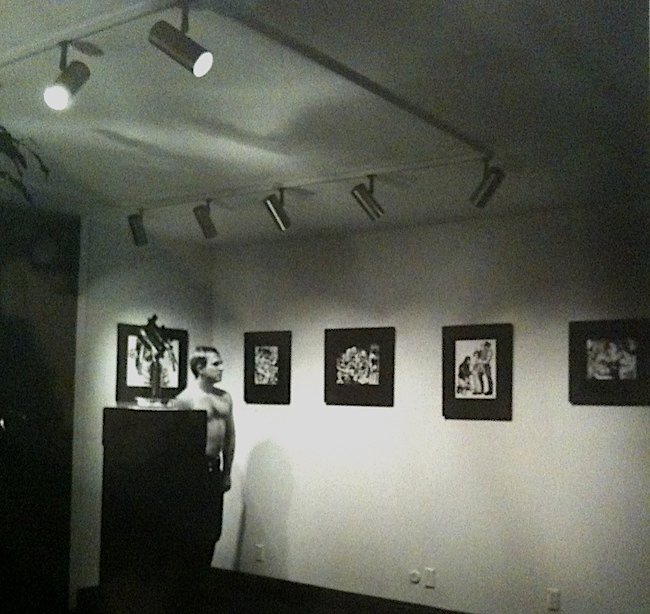
REX's unyielding commitment to his artistic ideals was both the engine driving his extraordinary creations and a source of friction in his professional and personal interactions. His perfectionism was legendary, with each drawing sometimes absorbing months, even years, of meticulous effort, every line a testament to his relentless pursuit of exactitude. Yet, this dedication came with a fierce defense of his vision, often bordering on inflexibility. While it positioned REX as an indomitable force in his field, it also forged a reputation marked by an uncompromising stance that could alienate collaborators. His readiness to abandon projects mid-stream if disputes arose underscored a predilection for artistic integrity over conciliatory engagement.
This intense fidelity to his vision made REX a polarizing figure within artistic circles. Colleagues experienced his approach as both invigorating and contentious, his contrarian nature paired with an outspoken drive that defied easy collaboration. Trent Dunphy, co-owner of The Magazine store, captured this duality succinctly, noting REX's penchant for unrestrained expression of opinion. It was a defining characteristic, reflecting a disdain for what he perceived as compromise or critique, with REX showing little patience for suggestions—viewed at times as challenges to his artistic authority. As someone who worked alongside REX, another contemporary described him as “a genius to work with,” yet also acknowledged the complexities of his personality, often misunderstood and enigmatic.
These merciless standards and mercurial temperament led to missed deadlines, strained partnerships, and a tendency towards public criticism, even of peers such as fellow fetish artist The Hun. REX’s open disdain for The Hun’s production speed disguised a layer of envy, revealing the vulnerability beneath his brusque exterior. In candid admissions, REX’s critiques veered into the personal, acknowledging jealousy while disparaging The Hun’s work, labeling it rushed. This mix of admiration and derision illustrated REX’s struggle with an industry that measured worth in quantity and compromise, a standard at odds with his pursuit of depth and meaning in every ink-stroked line.
REX's art, with its strident embrace of controversy, inevitably provoked strong reactions, both of admiration and condemnation. In 1985, recognition as one of San Francisco’s “100 Most Influential Artists” should have marked a celebratory pinnacle in his career. The Mayor’s Art Gala exhibition offered an opportunity to showcase his unique voice on a prestigious platform. Yet, true to his fearless ethos, REX submitted a piece entitled Dogtreats, an unapologetic exploration of fetish themes that immediately invited public ire. The San Francisco Chronicle publicly decried the work, deeming it too extreme for mainstream acceptance, and sparking a debate about boundaries in art.
Around the same period, The Village Voice published a provocative critique, suggesting that REX’s S&M drawings flirted with dangerous associations, accusing him of harboring “Naziphile” sympathies. Such accusations could have spelled reputational disaster, yet REX met them with characteristic defiance. To him, the entire point of his art was to challenge and provoke. As he remarked to an admirer perplexed by his penchant for extremity, if his images elicited discomfort, he had achieved his goal. This approach placed REX in perpetual tension with a U.S. cultural landscape increasingly inclined towards conservatism throughout the 1980s, a societal shift that ran contrary to his progressive, unapologetic vision.
Disheartened by what he perceived as an evolving cultural puritanism, REX began retreating from public life. His resolve to let his art be his declarative voice intensified; openings and publicity became anathema to his credo. "My drawings define who I am," he insisted, allowing his work to stand independently as testimony to his enduring beliefs and artistry. By the end of the decade, REX had cemented his status as a revered yet enigmatic figure—a legend within the leather underground scene, yet a ghost even to those who admired him. This intentional withdrawal underscored a complex relationship with recognition, where his truths were articulated not in interviews or photographs, but in every stroke of his iconoclastic artistry.
Bob Mainardi and The Magazine
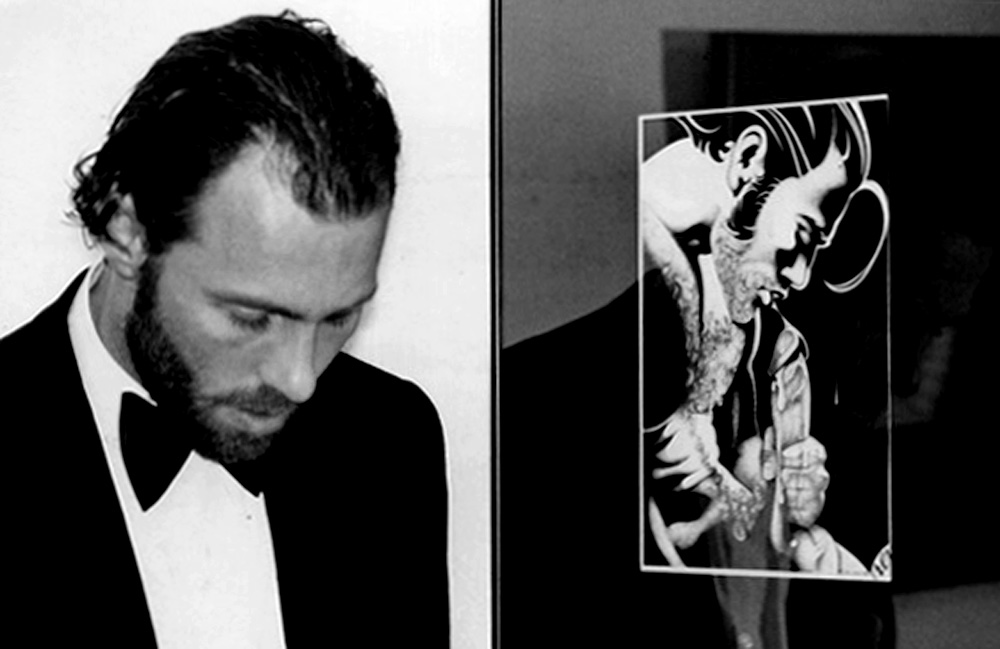
Within the intricate tapestry of San Francisco's cultural landscape, one of REX’s most significant supports emerged through his remarkable friendship with Bob Mainardi, co-owner of the storied Tenderloin establishment, The Magazine. Run alongside his husband, Trent Dunphy, this unique outlet at 920 Larkin Street operated like an 'olde curiosity shop,' renowned for its curated collection of vintage gay erotica, artwork, and various ephemera, changing hands through the decades yet sustaining its spirit of inclusivity and discovery for over 50 years. REX's entrance into The Magazine in 1980 was serendipitous, occurring at the height of his creative fame as he sought a venue willing to promote and sell his drawings.
Recognizing REX's undeniable talent and reputation, Mainardi and Dunphy became immediate allies, welcoming his work into their store and facilitating a vital income stream through the sale of his prints and portfolios. This gesture of solidarity extended beyond mere commerce, forging a deep personal bond between REX and Mainardi, one that transcended the traditional artist-dealer relationship. As their friendship deepened over the years, Mainardi became a confidant and patron, generously offering REX a private studio space on the second floor above their shop, bestowing upon The Magazine a dual identity as both a professional outlet and a personal refuge.
Mainardi's 2012 reflection on REX's work illuminates the profound respect and admiration he held for the artist’s contributions. He articulated how REX was more than just a creator of 'gay art'; he was a historian, voyeur, and provocateur—uncovering and portraying the secretive yet vibrant world of forbidden and politically incorrect sexual activity among men. These words underscore REX's role as a crucial documentarian of leather subculture, committed not just to depiction but to a conscientious engagement with the complexities and nuances of his subjects. Through his art, REX captured unvoiced narratives, offering a lens through which both the beauty and tumult of a hidden world could be observed and appreciated.
The unwavering support extended by Bob Mainardi and Trent Dunphy to REX was a testament to the profound bond they shared, one that flourished despite the artist’s notoriously prickly demeanor. REX, known for his reluctance to engage with the public spotlight and his sometimes gruff exterior, found in Bob and Trent two individuals who not only tolerated but cherished these idiosyncrasies as part of his genius. As Trent Dunphy later remarked, "Bob and I both loved him," capturing the essence of their affection and understanding for a man whose vision transcended conventional boundaries.
Mainardi's own interests in the realm of male erotica, evidenced by his authorship of a monograph on artist Harry Bush, aligned seamlessly with REX’s mission of preserving “forbidden” imagery. Mainardi recognized in REX a kindred spirit—a fellow custodian of narratives that the mainstream often sought to suppress or overlook. This deep-seated camaraderie provided REX with more than just professional opportunities; it offered him a safe haven at The Magazine, a sanctuary where his art could be appreciated without the judgmental gaze of a conservative art world.
The symbiosis of this friendship cannot be overstated. For The Magazine, championing REX’s work allowed the store to align itself with groundbreaking LGBT narratives and enforce its legacy as a bastion of cultural preservation and innovation. REX, in turn, found loyal advocates in Bob and Trent who not only facilitated the sale of his art during challenging periods but also provided emotional and practical support that was crucial to sustaining his career through leaner times. This mutual relationship enriched both parties, underscoring the transformative power of friendship built upon shared values and artistic vision.
David Hurles and Old Reliable
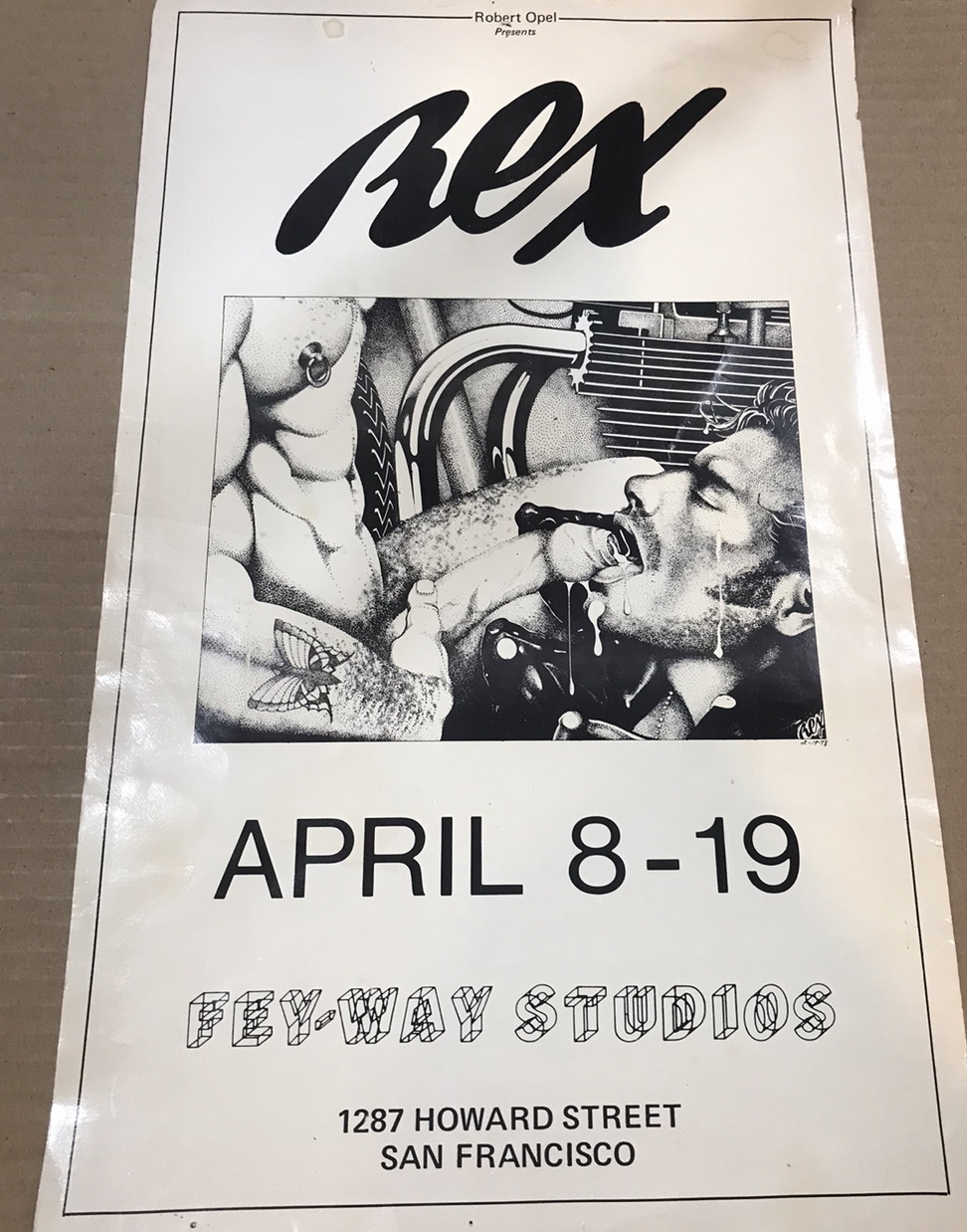
Within the vibrant and complex web of REX’s San Francisco connections, his relationship with David Hurles stood out as particularly significant and symbiotic. Hurles, the underground photographer famed for his "Old Reliable" brand, shared REX’s commitment to chronicling the raw and often unsettling landscapes of gay outlaw sexuality. For more than four decades, Hurles turned his lens toward society’s marginalized – the rough trade hustlers and ex-cons whose chiseled physiques and hardened lives embodied resilience and rebellion in equal measure. Through his gritty yet candid snapshots, Hurles not only documented reality but celebrated it, capturing scenes that were fixtures in the gay publications of the 1970s and 1980s.
The mutual respect between REX and Hurles was born of their shared fascination with the rugged fringes of human sexuality and its unrepentant authenticity. Each saw in the other a kindred spirit, steadfast in their resolve to embody truth against the increasingly sanitized portrayal of gay life that was taking root in broader culture. Through countless conversations and creative exchanges, their friendship became a cornerstone of mutual affirmation and inspiration. REX saw in Hurles a fellow truth-teller, unafraid to wield his art as both a mirror and a challenge to societal norms.
In his commentary for a book on Hurles, REX articulated a searing critique of the cultural hypocrisy he perceived: the double standard of praising sanitized nude art while rejecting the raw honesty exemplified by his and Hurles's work. This indignation was not born merely of frustration but of a deep-seated conviction that art ought to illuminate the darker recesses of human existence rather than expunge them. Through their alliance, REX and Hurles forged a creative legacy that was both audacious and unrelenting, honoring the subterranean narratives they felt compelled to bring to light. Their shared vision ensured that the beauty found within these rough and rugged truths remained unforgotten, echoing against the tides of mainstream dismissal.
The collaborative endeavor between REX and Hurles in 2005 was not just a professional partnership but a symbiotic blending of artistic visions that had matured over decades of independent exploration. When REX took on the role of curator and co-designer for the retrospective collection titled "Speeding: The Old Reliable Photos of David Hurles," he engaged deeply with Hurles’s vast archive, meticulously selecting images that distilled the essence of its raw authenticity. This project was more than an assembly of photographs; it was a celebration of a sexuality that had been widely marginalized yet fiercely documented by Hurles. REX’s curation, accompanied by his insightful commentary, highlighted the profound mutual respect that had defined much of their relationship.
Despite the significant collaborative success of the project, the friendship between REX and Hurles was not immune to the complexities that often accompany two strong personalities. Both were men of considerable determination and vision, which, at times, led to friction and misunderstandings. As REX would later candidly reflect, the connection between them had grown distant long before Hurles's passing in 2023. Yet, the introduction penned by REX for the "Speeding" collection functioned poignantly as a heartfelt tribute—an inadvertent eulogy that encapsulated the depth of their once-vibrant rapport.
The creative cross-pollination during the height of their collaboration in the 1980s pushed both artists toward greater extremes of honesty in their portrayals of gay male desire. Working in tandem yet adopting radically different mediums, REX and Hurles expanded the boundaries of homoerotic art well beyond mainstream acceptance. Through pen and ink, and through the lens, they offered compelling narratives that eschewed polish in favor of visceral truth, creating a legacy of boldness and authenticity that reverberated through their art. Each pushed the other into unexplored realms of honesty, ensuring that both voices resonated vividly within the tapestry of LGBT cultural history.
The 1980s presented a period of profound upheaval for REX, yet also one of considerable artistic evolution. This decade, fraught with personal hardships, saw him grappling with the challenges of poverty exacerbated by the devastating fire that obliterated his home studio. Compounded by the broader health crises ravaging the community, these adversities only underscored his resilience. REX, with his notoriously irascible nature and aversion to the limelight, navigated these turbulent waters both as a provocateur and as a fiercely devoted artist. His art, marked by an unyielding resolve to maintain integrity, stood as both defiance and affirmation, perpetuated by the unwavering support of a dedicated network of friends, patrons, and admirers who saw in him not just raw talent but a custodian of truth.
More than just a creator of provocative imagery, REX embodied the essence of San Francisco’s pre-AIDS leather culture, a milieu famed for its gritty authenticity and unbowed stance against societal norms. His fierce independence and sexual defiance mirrored the culture's own bold rebellion, a world unapologetically forbidden yet vibrantly alive. REX’s drawings were not mere illustrations of desire but deep narratives capturing the zeitgeist, drawing back the veil on an often-misunderstood subculture. His art served as both a mirror and a window—a mirror reflecting the community back upon itself and a window allowing outsiders a glimpse into its hidden intricacies.
As noted by Bob Mainardi, who perhaps understood REX’s significance better than most, REX was not simply an artist; he was a historian and a chronicler of hidden worlds. Through the crucible of the 1980s, amid trials that would deter the faint-hearted, REX honed a legacy that was anything but ephemeral. His work intimately documented a culture on the brink, preserving the vibrance of its pre-AIDS peak. This legacy, born from trials and immense personal cost, was carried confidently into subsequent decades. REX's perseverance and dedication ensured that his vision—uncompromised and true—continued to inspire and provoke, echoing through time as a reminder of a past fiercely, gloriously real.
The Secret Museum and a New Direction (1990–1992)

As the 1990s unfurled, they carried with them the winds of dramatic transformation for REX, both personally and professionally. On a deeply individual level, this decade marked a turning point as he finally received a definitive diagnosis of being on the autism spectrum—an understanding that illuminated the perpetual sense of apartness that had shadowed him throughout his life. This revelation acted as a key to understanding his interactions and world perception, offering clarity where confusion had long reigned. Concurrently, he sought treatment for chronic anxiety under the care of a compassionate San Francisco doctor, embarking on a journey towards internal peace and self-compassion.
Professionally, the atmosphere of the late 1980s had become increasingly inhospitable to the transgressive gay erotica that REX championed with such fervor. The pervasive impact of the AIDS crisis had unleashed a moral panic across society, reshaping cultural norms and inciting leaders to vigorously oppose the permissiveness celebrated in his art. This societal shift, compounded by pressures within the gay community itself to temper public displays of sexuality, struck at the very heart of REX’s creative ethos. His art, once a beacon of liberation and defiance, found itself caught in a tide of censorship, its natural power threatened by calls for suppression.
Faced with this climate of constriction, a disheartened REX chose a path of quiet rebellion—rejecting the inclination to dilute his work to appease changing tastes, he retreated from publishing for several years. This period of withdrawal was not merely an escape but a statement—a refusal to compromise his vision or silence his artistic voice for temporary acceptance. During this hiatus, REX wrestled with the dualities of maintaining artistic integrity amidst evolving cultural demands, a struggle emblematic of his steadfast dedication to truth and unwavering belief in the artistry that defined his life's work.
Yet, the indomitable spirit of REX could not be subdued indefinitely. By 1992, he orchestrated a strategic pivot that was both geographical and ideological, marking a renaissance in his artistic endeavor. Returning to New York City, REX inaugurated a covert and carefully curated space known as The Secret Museum at 218 Madison Avenue. This 'by appointment only' gallery was a cunning ode to the clandestine chambers of the world's storied museums, often veiled in mystery and allure. It was here, within these discreet confines, that REX could exhibit and sell his most provocative creations with an autonomy unhampered by external restriction. Trust was paramount; only selected patrons and those who shared his ethos were granted entry into this sanctuary of art that defied conventional propriety.
Relocating to New York was a symbolic and deliberate act of defiance, showcasing REX’s unwavering resolve to navigate beyond mainstream avenues that rejected his uninhibited truth. It was an assertion of artistic sovereignty, a deliberate choice to operate outside the conservative influences that had long sought to constrain his narrative. REX's voice resounded with resolute clarity: if traditional venues refused his uncensored work, he would engineer environments of his own design, free from constraints. This gesture was less about retreat and more a forthright confrontation with an era that often embraced censorship over candor.
In establishing The Secret Museum, REX not only crafted a refuge for artistic freedom but also engaged in a broader dialogue against the tide of cultural conservatism, defiantly asserting his right to be seen on his own terms. His past battles against societal, legal, and ecclesiastical forces had imbued him with a combativeness honed by decades of resistance. With The Secret Museum as his fortress, REX could embrace boldness amidst the storm of 1990s culture wars, providing a bastion for the honesty and unflinching beauty of his art while standing steadfast against institutions that attempted to define the limits of expression.
During this transformative period, REX's artistry began to transcend the confines of American subculture, achieving newfound recognition and acclaim in Europe. His inaugural art book, Rexwerk, was a milestone in this journey, released by the avant-garde Les Pirates Associés in Paris in 1986. This publication was a significant foray into the international stage, presenting a curated selection of fifty of his most striking drawings. The introduction penned by French editor Ralf Marsault was nothing short of laudatory, declaring REX as "unique in this century,” positioning him among the ranks of the great homoerotic masters. The book’s design—the cover a vivid blood-red contrasted with the stark black-and-white image of Phoenix—exuded a boldness that resonated strongly with European audiences attuned to its subversive charm.
This international validation served as a potent source of encouragement for REX, invigorating his commitment to his craft. By the early '90s, his entrepreneurial spirit led him to operate under the name “Drawings by REX,” through which he successfully distributed portfolios of his work on a global scale. These unbound sets of prints, notorious for their illicit allure, capitalized on the appeal that REX’s drawings held for collectors who prized both their aesthetic and their provocative nature. Beginning with his seminal Icons portfolio in 1977, REX expanded his repertoire to include evocative titles like Uncut, Undercover, Armageddon, Scorpio, Rexland, Legends, culminating in REX Sex-Freak Circus in the early 1990s.
Through these carefully curated collections, REX's art matured in complexity and ambition, delving into themes that mainstream galleries shied away from but which captivated discerning admirers. Each portfolio offered a dozen meticulously rendered ink scenes, often hailed for their detailed craftsmanship and printed on high-quality paper, inviting the viewer to frame and exhibit individual images as standalone works of art. The thriving popularity of these portfolios among those who understood and valued his vision, even as he remained marginalized in conventional art circles, underscored a burgeoning success achieved on his own terms. Far removed from the clutches of censorship, REX’s work traveled hand to hand, creating a legacy that was as enduring as it was defiantly independent.
Before his departure from San Francisco to New York, REX engaged in a final creative flourish that encapsulated both the culmination of his American journey and the evolution of his artistic vision. In the years 1990–91, he embarked on what would become his last and most surreal series of original drawings, culminating in a portfolio known as “REX Sex-Freak Circus.” This collection took a bold, phantasmagoric dive into the tropes of circus life and sideshow freaks, all viewed through REX’s unmistakably erotic, outsider lens. This series was not merely a continuation of his thematic explorations but a transformation, reflecting the complex tapestry of his experiences as an artist living at the margins.
In many respects, Sex-Freak Circus served as an allegorical reflection of REX’s own narrative as a societal outcast. Embracing the adage “he ran away to the circus,” REX conjured a symbolic world that mirrored his own ethos—a carnival of the absurd inhabited by society's outlaws and misfits. Within this circus realm, clowns, strongmen, and eccentric performers collectively articulated a subculture of acceptance and kinship, an environment reminiscent of the leather and sexual renegades he celebrated in his drawings. REX’s circus was more than a mere freak show; it was a sanctuary for those exiled from social orthodoxy, offering a community where inclusivity thrived amidst the chaos.
The creation of Sex-Freak Circus marked a significant maturation in REX’s work, blending raw sexual energy with layers of satire, fantasy, and social commentary. His drawings transcended simple depictions of illicit pleasure, evolving into the construction of a darkly imaginative mythology surrounding sexuality and identity. Through this series, REX embraced the role of a mythmaker, challenging the viewer to consider the constructs of normalcy and deviance. This intricate juxtaposition of themes elevated his art to a new level of complexity, suggesting that beneath the sensuous exterior lay profound narratives about belonging and acceptance. As such, Sex-Freak Circus stood as a testament to REX’s indelible impact on homoerotic art, weaving together the strands of his artistic legacy with the threads of societal critique.
Despite achieving a significant creative zenith with his art, REX found himself increasingly at odds with the cultural establishment, where antagonism towards his work continued to swell. In 1991, he articulated this chasm through a furious open letter, published in the Bay Area Reporter, that effectively delineated his personal Declaration of Independence from the perceived hypocrisy of American society. His words expressed a profound disillusionment with the prevailing cultural ethos, stating, "I wanted to grow up and become an Anarchist because I was so repelled by the perpetual venality on which American society operates — all doxied up in the U.S. flag, crucifixes clanking ominously whenever a new thought appears in the room.” In these words, REX laid bare his contempt for the duplicity he saw as entrenched in the American cultural landscape.
REX expounded upon the double standard inherent in the world of art, where revered institutions and academies, including the Vatican, house collections of what is essentially pornographic art. He drew a lineage from Michelangelo to Picasso, highlighting how nearly every great artist has engaged in this form, yet modern society remains quick to condemn contemporary expressions of the same. To REX, "drawing dirty pictures" stood as a rebellious act of Civil Disobedience, a gesture more potent than mere symbolic protests like flag burning. His identity as a Pornographic Artist was not one of derision but defiance, a mantle he wore to challenge cultural norms and provoke deeper engagement with art's potential to incite both thought and emotion.
This declaration marked a turning point, igniting in REX an uncompromising stance that would soon impel him to seek environments more conducive to his ideals. Asserting that “when Pornographic Art is well done, it does come close to anarchy... that’s what I strive for – to really get their juices flowing till they lose control: that’s anarchy,” REX embraced a radical aspiration: to unseat comfort and provoke unrestrained response through his work. Unfettered by the constraints of a conservative American ethos, he set his sights beyond U.S. borders, searching for liberated horizons where his artistic rebellion could thrive without the hindrance of societal repression, thus preparing for a new chapter in his storied journey.
Persona Non Grata – Art vs Censorship (1993–1995)
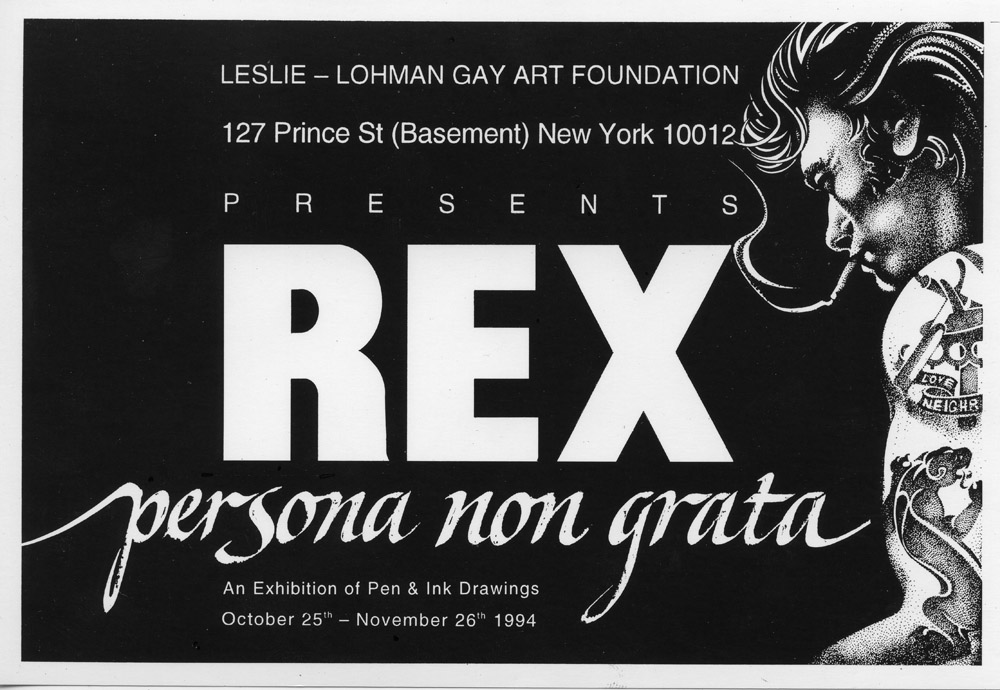
The mid-1990s served as a crucible for REX, a period that would indelibly mark his stature in the art world as both an innovative visionary and a perpetual catalyst for controversy. While his peers in mainstream art navigated the limelight with cautious equilibrium, REX remained resolutely on the periphery, his work purposefully entrenched in uncharted waters that mainstream institutions shied away from. The explicit nature of his imagery, combined with its unapologetic embrace of politically incorrect themes, rendered him "persona non grata" within conventional American art circles. His extreme portrayals of fetish and sexuality were "too hot to handle," creating barriers that made public exhibitions an impossible pursuit. Museums, galleries, and publishers, while sometimes intrigued by his work, eschewed association for fear of backlash or legal repercussions.
Despite the groundbreaking precedent set by artists like Mapplethorpe, REX's unapologetic exploration into taboo subject matter placed him beyond the comfort zone of even the post-Mapplethorpe era, which itself was marked by an evolving approach to explicit content in art. This tension came to a head when a scholarly book titled Gay Ideas faced a series of rejections purely because of its inclusion of REX's drawings, indicative of the trepidation his work elicited even among gay-friendly publishers. Critics seized upon his art as emblematic of the perceived excesses of the fetish underground. Notably, Richard Goldstein's critique in the Village Voice lambasted what he saw as "Naziphile" elements within gay S&M culture, using REX’s provocative imagery as the focal point of his diatribe.
Much of the controversy surrounding REX stemmed from his willingness to push boundaries beyond societal taboos, touching upon themes such as bestiality, urolagnia, and characters that were arguably underage. These elements, while forming only a subset of his broader work, ensured that REX remained at odds with both mainstream and some progressive art circles, who maintained a cautious distance. REX's commitment to his craft as an act of civil disobedience—a defiance against restraining norms—positioned him as an outlaw artist, inhabiting the cultural fringes with pride and unyielding honesty. The path he carved was one of isolation and resilience, artistically audacious yet critically contentious, underscoring his refusal to compromise even as he ventured into the darkest corners of human imagination.
Even as mainstream art institutions distanced themselves from REX’s provocative oeuvre, his work began to garner a distinct and celebrated recognition within the gay art subculture. In April 1994, a pivotal moment materialized at the fledgling Leslie-Lohman Museum of Gay and Lesbian Art in New York, then in its foundational years as the Leslie-Lohman Gay Art Foundation. The retrospective, pointedly titled “Persona Non Grata,” was not just an exhibition; it was a reclaiming of narrative. Hosted in a modest Prince Street basement gallery, the show marked one of REX’s most significant displays in recent memory, distinctively set outside the conventional sphere for art, instead finding home in a space designed by— and for—the LGBTQ community.
The title “Persona Non Grata” underscored REX’s ongoing pariah status within the art establishment while simultaneously challenging that narrative by openly showcasing his work. By hosting the exhibition, the Leslie-Lohman Foundation made a deliberate and defiant statement: REX’s art, despite its provocations, was valuable and merited preservation as part of the cultural dialogue. For visitors, this show was a rare window into REX’s intriguing explorations from the late 1980s and early 1990s, a period whose complex and compelling imagery had been largely sidelined by mainstream curators. It was an exhibition that illuminated, albeit in fragments, the notorious Sex-Freak Circus series among others, although even Leslie-Lohman cautiously chose to present some pieces only privately. A full, public exhibition of the entire series would not occur until much later, during a one-night event in March 2013 co-hosted by the foundation and The Saint nightclub.
The 1994 exhibit was a turning point for REX, a catalyst that signaled his vital role within the gay art community which regarded him as a visionary figure at risk of being obscured by history’s forgetfulness. This event underscored the dichotomy that defined REX's career: shunned by mainstream venues yet embraced by a subculture that valued his daring and audacity. It was more than a mere display; it was a recognition of a legacy that shone brightest in the corners deemed too contentious by conventional eyes. As the Leslie-Lohman show powerfully demonstrated, while the broader art world may have sidelined him, REX’s art resonated deeply within spaces that understood and cherished the transformative power of his vision.
Leslie-Lohman: A Sanctuary for Queer Art
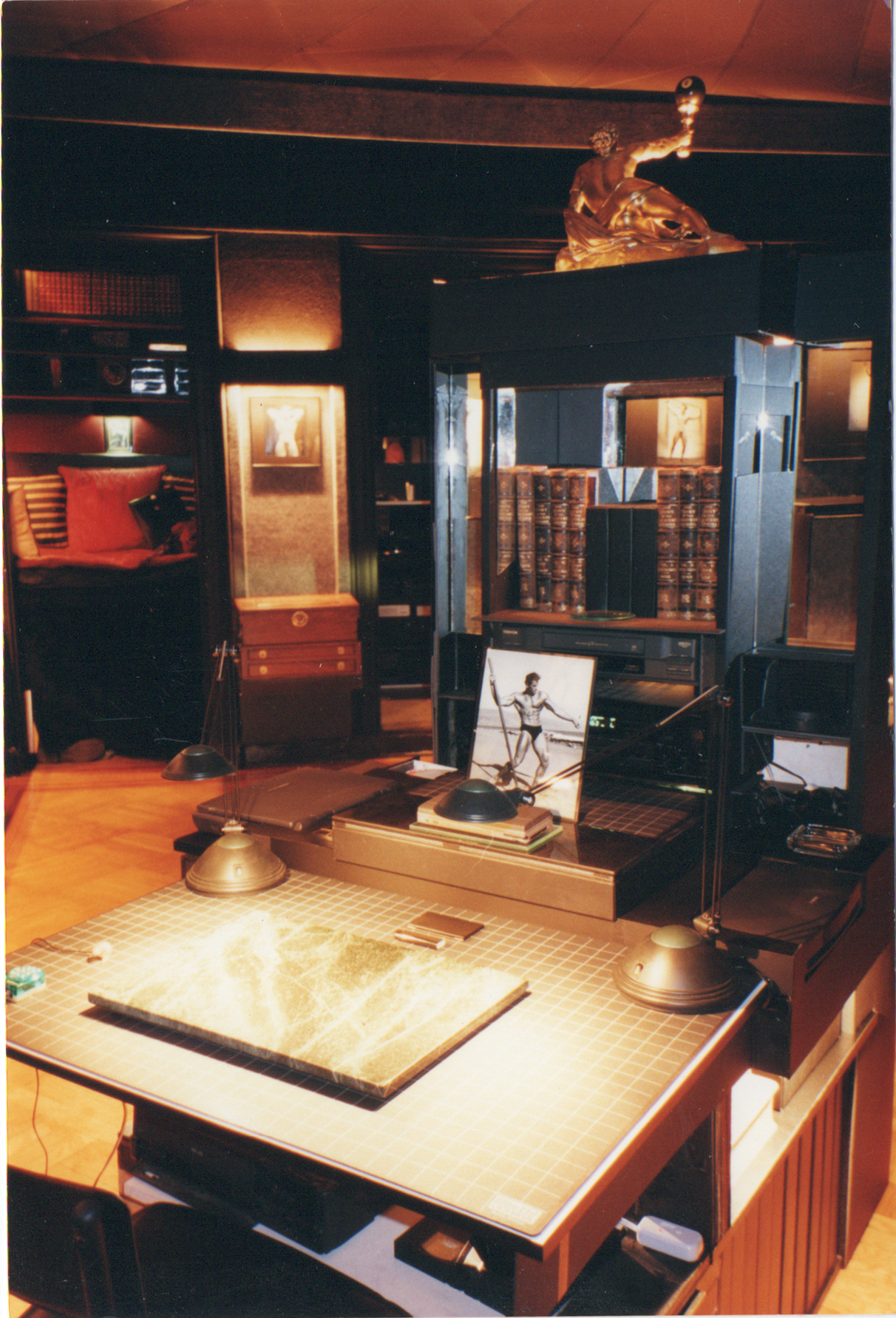
To truly grasp the significance of REX’s 1994 retrospective, one must appreciate the unique nature of the Leslie-Lohman Gay Art Foundation, now known as the Leslie-Lohman Museum of Art. This institution was birthed from the vision of Charles Leslie and J. Frederic “Fritz” Lohman, two pioneering figures who, since the 1960s, had quietly dedicated themselves to collecting and preserving gay erotic art. In 1969, in the immediate wake of Stonewall—a time when representations of gay identity were often discarded or repressed—they dared to host their first informal show of homoerotic art in their SoHo loft. This bold move marked the inception of a platform from which artists like Tom of Finland could emerge—artists whose exploration of the male form challenged norms and celebrated nuances of identity unspoken in mainstream dialogue.
Despite facing police harassment, minimal sales, and the immense sorrow brought on by the AIDS crisis—which claimed the lives of numerous artists and patrons—the foundation embodied resilience. In 1987, it took a further step towards preservation by forming a nonprofit organization dedicated to safeguarding LGBTQ artwork, a mission that was initially rebuffed by the IRS due to the presence of "gay" in its name, delaying its official recognition until 1990. Operating from a basement on Prince Street, this tenaciously curated space became the first museum of gay art globally, achieving official museum status in 2016. Its collection encapsulates the breadth of gay experience, from Tom of Finland's hyper-masculine visions to feminist painters and contemporary voices, filling gaps left by neglectful mainstream narratives.
The Leslie-Lohman foundation's decision to hold REX's retrospective at a time when others balked, and to maintain his works in their permanent collection, underscores his pivotal role in the continuum of gay art history. REX’s raw, provocative imagery found a sanctuary here, within walls dedicated to safeguarding art that champions courage and authenticity. This stance allied him with storied LGBTQ art rebels whose legacies might have vanished without Leslie-Lohman’s unwavering advocacy. The Persona Non Grata exhibition not only affirmed REX’s place as an artist of profound importance but also solidified his legacy in a pantheon that thrived in defiance, crafting a narrative of resilience and innovation foundational to the LGBTQ artistic lineage the foundation so zealously preserves.
Within the nurturing confines of Leslie-Lohman and similar bastions of avant-garde expression, REX continued to weave his narrative of underground art, fostering both collaboration and an expanding global audience. These sanctuaries provided much-needed platforms for his provocative work, allowing him to engage with fellow outsiders in an artistic ecosystem that thrived on defiance and shared vision. Using his mail-order business as a lifeline, REX reached an international fan base eager to engage with art that challenged and inspired. He occasionally punctuated this outreach with small exhibitions, maintaining a connection to those who understood his commitment to art as confrontation.
As the 1990s progressed, REX's voice grew louder in critique of what he perceived as the sanitized aesthetic gaining traction within mainstream acceptance. He openly derided the proliferation of art featuring "cookie-cutter nudes" and "antiseptic, nonthreatening males posed in luxurious settings," which dominated glossy publications and galleries. In a candid interview reflecting on this trend, REX dismissed such works as "idealized homo-eroticism with which viewers could feel at ease"—placating images that, in his view, comforted rather than challenged the status quo. This category of art, tailored to assuage heterosexual sensibilities, stood in stark contrast to his own brash, unvarnished explorations, rooted in authenticity and resistance to convention.
For REX, the art of provocation was not merely a method but a fundamental principle, a stance that widened the chasm between him and commercial galleries. Yet this only deepened the connection with his core devotees, who regarded him as a standard-bearer for unfettered sexual expression. His relentless dedication to portraying truth over comfort resonated with an audience that valued art as a tool for evocation and inquiry—an audience that embraced subversion as aesthetic integrity. In REX’s world, art was an act of rebellion, and he remained defiantly estranged from mainstream galleries, a position that cemented his reputation as an artist committed to challenging norms and nurturing an evergreen dialogue through his work.
By the culmination of 1995, REX stood at a significant precipice, having traversed a half-decade marked by turbulence and transformation. Within this period, he carved out a distinct niche as both a cult artist and a provocative activist, gaining recognition and respect within dedicated LGBTQ institutions like Leslie-Lohman. Yet, this acknowledgement came hand in hand with a profound sense of exile from the mainstream U.S. art scene, where his work remained contentious and largely unwelcome. The evolving American cultural landscape, in REX's view, seemed ensnared in a cycle of growing prudishness and "Political Correctness," movements he felt stifled true artistic expression and neutered the vibrancy he believed art should possess.
This mounting cultural conservatism presented REX with a stark dilemma—to continue his seemingly quixotic endeavor to showcase his X-rated art in a milieu resistant to its provocations, or to abandon this front in search of creative freedom beyond American borders. The juxtaposition of recognition within his tribe and rejection by broader societal norms left REX contemplating the essence and purpose of his art. Would he persist in challenging the status quo, a lone sentinel of defiance against cultural constriction, or embrace a newfound liberty in a setting more accepting of the unfettered truths he sought to express?
This crossroads was not merely a choice of geographic relocation but a pivotal moment in his artistic life, demanding introspection about the very nature of his craft and its intended impact. In drifting toward potential liberation overseas, REX confronted the perennial artist's question: should art’s role be to comfort the society that observes it, or to challenge it to discomfort, to awaken? The answers he would find in this period echoed far into his later works, an exploration not only of self but of the landscapes that foster genuine artistic freedom. For REX, the world became both palate and palette, a canvas for expressions that demanded space unconstrained by the boundaries of convention.
Kindred Spirits – Tom of Finland’s Legacy and Durk Dehner
Amidst the cultural skirmishes of the 1990s, REX found steadfast solace and solidarity in the knowledge that he was not charting these turbulent waters alone. He was an integral part of a small but formidable brotherhood of pioneers in gay erotic art, with Tom of Finland standing prominently among them. This connection harkened back to the 1970s, when REX first encountered a bootleg magazine featuring Tom’s daringly explicit drawings—a discovery that irreversibly transformed his artistic trajectory. Tom's images of men engaged in same-sex passion with fervor and freedom opened a vista for REX, validating that the hidden fantasies he harbored could transcend secrecy and become art. This watershed moment not only galvanized REX’s expression but positioned Tom of Finland as a beacon of inspiration, guiding the trajectory of his own creations.
Despite the differences in their ages, with Tom being two decades REX’s senior, the two artists shared a profound kinship across continents. Each occupied parallel domains in their respective spheres, crafting images that celebrated masculinity in its most audacious forms. Tom’s hyper-masculine sailors, bikers, and leathermen resonated with the same provocations that REX embraced, proving that their kind of art could survive, and even thrive, in the face of societal repression. Each faced their own trials—censorship and the harsh scrutiny of authorities—but both artists remained undeterred, fueling a quiet revolution in self-perception and identity among gay men. Their art spoke not just to desire, but to liberation, empowering viewers to see themselves through a lens of pride and authenticity.
It was perhaps inevitable that REX would eventually align with Tom’s circle and the organization dedicated to preserving his legacy. This affiliation was more than just a professional link; it was a reaffirmation of their shared commitment to pushing boundaries and redefining the narrative surrounding gay identity and expression. By connecting with Tom’s legacy, REX further enshrined his own place in a lineage of artists whose works challenge and transform the cultural landscape, reaffirming the intrinsic power of art to reshape reality and reflect deeper human truths.
In 1984, the artistic landscape was irrevocably altered by the co-founding of the Tom of Finland Foundation (ToFF) in Los Angeles, created by the visionary Tom of Finland and his devoted ally, Durk Dehner. Both saw an urgent need to safeguard and celebrate erotic art that was perpetually at risk of erasure. Durk, whose aesthetic sensibility and charisma as a former model had made him both muse and advocate for Tom, understood that without deliberate preservation, such art could be marginalized into oblivion. Thus, the Foundation emerged as a bastion for "the art and culture of our community," curating a collection, facilitating exhibitions, and fostering a supportive network for artists devoted to homoerotic expression.
Following Tom's death in 1991, Durk Dehner became the torchbearer for their shared mission, extending the Foundation's protection and influence across international waters, actively integrating other artists who shared their vision into its embrace. It was inevitable that REX’s path would intersect with that of Durk, as both men were bound by a fervent dedication to cultivating what REX called a "universal Gay aesthetic." REX later reflected on their intertwined destinies, recalling how they began “separate but similar journeys to form a cohesive American Gay art movement in the nineteen sixties.” Despite working in distinct geographic and conceptual realms, by the 1990s they had emerged as unequivocal kindred spirits.
Durk Dehner's championing of artists like REX, those rejected by mainstream galleries, was crucial. The Foundation offered platforms—through initiatives like the Tom of Finland Art Fairs and curated exhibitions—where art could be exhibited unfettered by the constraints and censors of conventional spaces. This alliance enabled artists to reach collectors and enthusiasts eager for unvarnished, authentic works. Through ToFF, REX found not only a sanctuary for his art but a partner in amplifying the defiant, revolutionary ethos that defined their collective endeavor to enrich and expand the narrative of gay art, ensuring its resonance for future generations.
REX’s relationship with Durk Dehner and the Tom of Finland Foundation was anchored in profound mutual respect and an aligned mission to elevate sexually charged art beyond mere aesthetics to an acknowledged cultural significance. Durk's admiration for REX’s uninhibited vision was evident in his inclusive curation, ensuring that REX’s works found a permanent home within the Foundation’s collection. An early piece by REX from 1978, capturing the essence of leather-bar culture, serves as a testament to the shared ethos that underpins their collaboration. For REX, finding an ally who comprehended the cultural value inherent in their art was invaluable, weaving a tapestry of appreciated art that transcended simple depictions to reflect deeper societal truths.
In 2016, the Tom of Finland Foundation formally recognized REX’s contributions by inducting him into its Artist Hall of Fame, an honor he accepted on behalf of “all the nameless and now forgotten gay artists” of his era, who had engaged in their struggle to claim space for this art form. Within the walls of the Tom of Finland Foundation's gallery, affectionately dubbed the "Tom House," REX reflected on the intricate journey of their shared history, one that extended back nearly four decades. He laudably acknowledged Durk Dehner’s unwavering commitment to enhancing the public’s consciousness of gay art—a campaign that advanced from national to international stages despite facing formidable resistance. REX praised Durk’s relentless efforts, claiming that without such determination, the very movement and space they inhabited may not have survived.
This heartfelt tribute cast Durk and REX as parallel advocates striving for a shared world where their expressive freedoms could prevail. With the Foundation’s growth through the 1990s and 2000s—offering exhibitions, safeguarding archives, and mentoring future generations—REX discovered an enduring sanctuary for his provocative artistry. The Foundation, at his death in 2024, memorialized him as a "legendary artist," celebrating how his bold pen-and-ink fantasies captivated and challenged audiences globally. The tribute underscored REX and Tom’s unyielding refusal to trade their artistic and expressive liberty for social acceptance. Ultimately, REX’s strategic alliance with the Foundation cemented his legacy within a tradition initiated by Tom of Finland, where erotic art served as both activism and a beacon of liberation, while also establishing a vital transatlantic network of allies essential for his future endeavors.
Breaking with America – Exodus to Amsterdam (1996–2000)
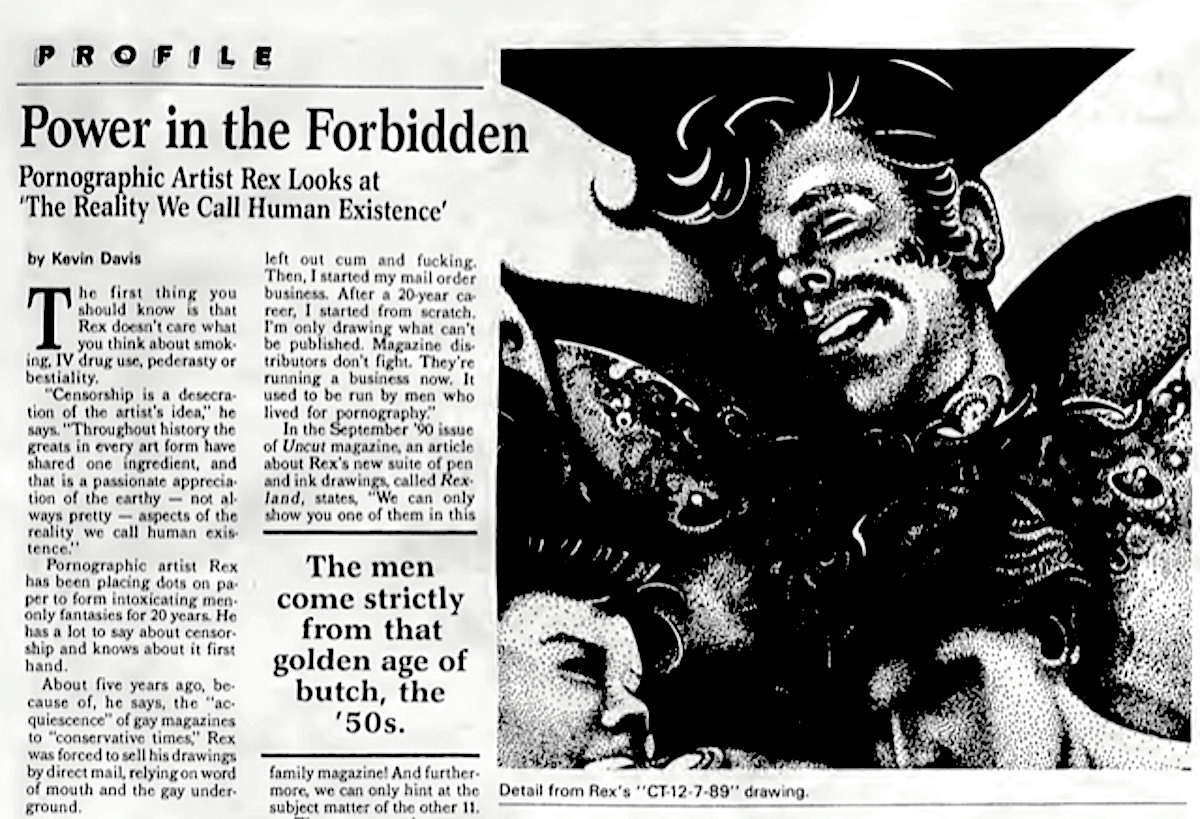
By the time the late 1990s rolled around, REX found himself grappling with a growing disillusionment toward America. The cultural skirmishes of the time, characterized by political crackdowns on NEA-funded art that authorities labeled “obscene,” alongside a shift in gay politics towards a more assimilationist tone, fostered in him a sense that the nation was regressing in its acceptance of sexual expression. These cultural tumultuous tides reinforced his perception that America was forsaking its claims of freedom. REX's existence had long been a bicoastal dance, maintaining his Manhattan Secret Museum studio while retreating to his modest room above a bar on Valencia Street in San Francisco. Yet, as the century drew to a close, he began envisioning a life unanchored by American soil.
His experiences in Europe had already illustrated to him that the continent offered a more embracing environment for his distinct brand of art. Cities such as Amsterdam, Berlin, and London, with their flourishing leather and fetish subcultures and their rich tradition of avant-garde erotic art, were at home with the kinds of expression REX championed rather than shrank from it. Amsterdam, in particular, stood out as a beacon of Dutch tolerance, with a record of hosting his exhibitions since the early 1980s and welcoming a devoted following that mirrored his own philosophy of liberated expression. Through gallery shows dating back to 1983 and an appreciative audience, REX had observed firsthand the openness with which his work could be celebrated overseas.
These cumulative experiences nudged him toward the profoundly transformative decision to relocate. The America he sarcastically dubbed the "Land of the Free (Conditions Apply)" no longer felt like home, prompting him to pursue what he viewed as a form of creative asylum in the Netherlands. This move represented not just a geographical shift, but a deep commitment to maintaining the integrity of his artistic pursuits in an environment more aligned with his ideals. In seeking refuge in an accepting culture, REX hoped not only to sustain but to further liberate the provocative vision that had set him apart, ensuring that his art continued to challenge, provoke, and inspire without the weight of censorship and misunderstanding that had long shadowed his American dream.
The events of September 11, 2001, cast a long shadow over creative communities, and in the resulting aftermath of economic and societal turmoil, the arts in Manhattan came perilously close to a standstill. As galleries struggled to survive, REX's Secret Museum, always operating on slender margins, succumbed to the pressures and was forced to shutter its doors. This closure marked a significant turning point for REX, who, disillusioned by the prevailing cultural climate and the stifling grip of political correctness, found himself reassessing his future in the United States. Packing up his life in early 2002, REX briefly returned to San Francisco, yet he sensed he had outgrown what America could offer.
With a palpable air of finality, REX made a decisive move to Europe, drawn to the promise of artistic freedom that had long intrigued him from afar. By 2000, he had been making extended sojourns to Amsterdam, a city whose storied history of tolerance and appreciation for avant-garde expression resonated deeply with his own ethos. By 2010, this transient connection transformed into permanent residence, symbolizing not just a physical relocation but a definitive break with America. REX often remarked, with characteristic wit, that he had become a 'persona non grata' in the States simply for striving to depict the authentic truths of gay male desire. In contrast, Amsterdam offered a rejuvenating embrace where REX could reclaim his identity as an artist.
In Amsterdam, REX experienced a creative renaissance, finding the freedom and appreciation that had become elusive back home. The city's openness to diverse artistic expressions validated REX’s uncompromising approach, providing a fertile ground for his work to flourish. This newfound acceptance culminated in 2014 when Amsterdam hosted his first uncensored public exhibition in 15 years at CNCPT13 Gallery, an event symbolizing the artistic vindication he sought. The choice of Amsterdam as the venue was not incidental; it was a testament to the city's role as a sanctuary for expression without restraint, a place where REX's art could resonate in all its provocative glory. Through this transition, REX reaffirmed his commitment to his craft, liberated from the constraints he had once endured in America, and found a home that celebrated his vision with the reverence it deserved.
As the millennium turned, REX drifted from the immediate purview of the American art scene, yet this distancing did not mark an end to his artistic endeavors. Within the quiet sanctuary of his Amsterdam studio, he persisted, continuing to draw with the same fervor that had defined his earlier years, while simultaneously curating his existing body of work for posterity. His venture into the digital sphere, through a personal website offering subscriber access to his archives, allowed him to circumvent traditional galleries and establish a direct conduit to his audience. From afar, REX observed as the United States began to slowly embrace the elements of culture he had long championed, culminating in honors such as his induction into the Leather Hall of Fame in 2022—a nod to his indelible influence on leather and fetish culture.
Having found refuge in Amsterdam, REX relished the liberty to display his art without the censorship that had once constrained him in America. Here, he became a self-imposed expatriate, a rebel artist whose stature grew in absence as a new generation discovered his trailblazing work online and through underground channels. REX's imagery, once considered marginal, transformed into cherished artifacts of inspiration, admired by creators who marveled at its prescience and boldness. To REX, Amsterdam was more than just a locale; it was a cultural haven where openly gay life, fetish clubs, and stations dedicated to erotic art acknowledged his contributions with respect rather than scandal. The warmth of recognition abroad contrasted sharply with the estrangement he had felt at home.
In leaving America, REX completed a full-circle journey—from a young provocateur inspired by overseas art, to an elder statesman of sexual liberation on a new continent. The closing years of the 1990s were pivotal: a period of upheaval and renewal wherein REX, confronted with persistent challenges, reaffirmed his allegiance to his artistic vision, choosing freedom over compromise. This chapter of escape was as much an inward journey as it was physical relocation, affirming REX's role as a fearless pioneer who, through unwavering dedication, had claimed a place of true belonging in the heart of Amsterdam's cultural tapestry. The stage was set for his final years abroad, where he would continue to influence and inspire, free at last to create on his own terms.
Theme: Surreal Fetish Circus and Sideshow Imagery, Homoerotic “Freaks” and Outcasts
REX’s Sex-Freak Circus portfolio represents a grand culmination of his late 20th-century oeuvre, symbolizing the final flourish of an artist who had spent decades relentlessly challenging the boundaries of societal norms. Born from his imagination around 1990 and brought to completion by 1991, the series comprises twelve drawings that transform the traditional circus and sideshow attractions into realms of erotic and transgressive wonder. REX’s reinterpretations of strongmen, clowns, and other oddities create a space where sexual fantasy intertwines seamlessly with social satire and a gothic carnival’s dark charm. This visionary circus reflects his fascination with society's outcasts—hustlers, leathermen, punks, and "sexual outlaws"—placing them in a venue that invites the observer into a flamboyant celebration of otherness.
The title Sex-Freak Circus serves not only as an apt description but as a bold embrace of the term "freak," imbued with an unapologetic pride that defies conventional criticism. By calling his portfolio such, REX revels in the audacious identity of those who inhabit the peripheries of societal acceptance. Much like the leather community he had been part of and documented, this "circus" symbolizes a metaphorical realm where those deemed outsiders claim their rightful position under the spotlight. It transforms the marginal into the magical, calling into question the norms that define who belongs and who is othered.
In this phantasmagoric circus, REX articulates a profound fantasia that insists on the viewer’s participation, blurring the barriers between spectator and spectacle. Each scenario unfurls a narrative layered with complexity—inviting contemplation and confrontation in equal measure. As much as these scenes are fantastical, they are also political, weaving a tapestry of subtext challenging the viewer to reconsider assumptions about identity, acceptance, and community. Through Sex-Freak Circus, REX not only captures a vivid tableau of desire and defiance but encapsulates his unwavering artistic vision that sought to make the marginalized central—not only in art but in life itself. This final act of bravura serves as his legacy, a testament to the rogue’s realm where REX’s imagination invites everyone to find refuge and revelry beneath the circus tent.
The drawings in Sex-Freak Circus stand as vivid exemplars of REX’s hallmark method: meticulous pointillism, transforming ink into a symphony of textures and shadows. This technique imbues each piece with layers of depth, pulling the viewer into a sensory engagement with every detail. Each composition reimagines traditional circus motifs through a subversive lens: notably, the depiction of conjoined twin men—bearded, muscular, and exposed from the waist down—presents a startling visage. Fused at the hips, yet boasting two torsos and fully aroused phalli, these twins become reflections of each other, enacting an ongoing loop of narcissistic yearning. This tableau transcends its initial shock value to embody a richer exploration of self-love and duality, echoing the doppelgänger archetype found in poetry and myth that reveals profound truths about identity and desire.
Another prominent image in the series conjures the Strong Man archetype. This figure, endowed with a handlebar mustache and leopard-skin attire, exudes dominance—visually and symbolically—over a diminutive partner, exaggerating and yet lampooning the inherent power dynamics. The scene’s overt erotic charge is tempered with humor, rendering a multifaceted narrative that both titillates and amuses. Likewise, the portrayal of the tattooed “Sword Swallower” adds a sly, provocative layer to the circus act—here, the sword is unmistakably phallic. An audience composed of quirky misfits gazes upon the act, captivated by simultaneous awe and arousal, as REX blurs boundaries between traditional entertainment and carnal exploration.
REX’s indulgence in the grotesque extends beyond mere aesthetic shock to challenge societal perceptions of otherness. By presenting physical disability and deformities that echo historical sideshow allure, REX transforms these traits into symbols paired with hypersexuality. Such juxtapositions force a reconsideration of biases and desires, as displayed in a striking scene portraying a limbless figure (a nod to sideshow history’s Prince Randian) being sensually attended to by a playful clown. This unsettling yet poignant image unravels the viewer's preconceptions of pity and perversion. REX further explores the threshold between man and beast with visuals of human 'pets' leashed beside animals, and a ringmaster in a horse-head guise. By weaving these elements into his work, REX provocatively dances with taboos, leveraging shock as a vehicle for deeper reflection, ensuring the series resonates well beyond mere spectacle, demanding contemplation and challenging cultural norms.
On the surface, REX Sex-Freak Circus emerges as an opulent tableau of fetishistic fantasy, where robust figures clowning under flamboyant makeup and strapped in leather harnesses indulge in acts defiant of convention. Yet beyond this overt display, the series offers a profound commentary on society's notion of the “other.” The age-old phrase “run away and join the circus” evokes the allure of escaping the ordinary to join an assembly of misfits. REX captures and magnifies this metaphor, positing the leather and BDSM gay subculture from which he arose as its own circus—a nomadic enclave lurking at society’s edges, where outliers discarded by the mainstream fabricate their own ethos and embrace their uniqueness.
The performers in his surreal carnival—symbolized by conjoined twins embodying the unity within diversity, or the maniacally grinning clown who channels chaos into catharsis—signify more than flamboyant imagery. They embody liberation through conspicuous difference, flaunting that which society often suppresses. The joyful subversion, inviting and macabre, beckons reflection. Classic American nostalgia, reminiscent of bygone carnival lore promising "freaks, wonders, and human curiosities," is here recontextualized with kink and homoeroticism. This inversion provokes and teases, compelling viewers to evaluate the source of their discomfort and intrigue as it asks them to reconsider societal taboos.
The juxtaposition of REX’s whimsical and darkly humorous narrative style with intense primal imagery stirs a romantic yearning in many, as noted by cultural commentators. It channels reveries of a seemingly more permissive past—returning to epochs when expressions of sexuality were less constrained by political correctness. Beneath the overt decadence of REX’s illustrations lies a nuanced longing for a realm where “freakish” yearnings find affirmation, and exiles can weave familial bonds beneath the circus tent. Thus, REX’s work becomes a conduit, inviting introspective journeys into the soul’s capacity for unconventional love and acceptance, offering a tantalizing reverie where identity and desire revel amidst their own vibrant spectacle.
The reception and legacy of Sex-Freak Circus offer a poignant reflection on the societal constraints that defined much of REX’s career, as well as the enduring impact of his work. Despite being completed in the early '90s, this series languished in obscurity for decades, shielded from public view by the audacity of its content, which far outstripped the tolerance even of many gay-friendly galleries. Its existence took on a mythical aura among REX’s followers—seen by only a select few collectors who cherished the limited prints they were fortunate to acquire. The idea of a full exhibition remained unattainable until 2013, when the series was finally unveiled in its entirety for just a single night, underscoring the work's radical nature.
This rarity in exhibition highlights REX’s dual reality: the creator of an underground masterpiece constrained by the very forces it sought to challenge. Although obscured from mass audiences, Sex-Freak Circus permeated the gay art scene through whispers and elusive sightings, wielding significant influence over younger artists inspired by its legendary reputation. The portfolio serves as a poignant conclusion to REX’s career of original creations, marking the last named set he crafted before dedicating himself to commissioned works and retrospectives. In crafting these images, REX had metaphorically "run away to the circus," indulging his most extravagant fantasies and poignantly closing a chapter in his artistic journey.
For scholars and enthusiasts of gay art and erotica, REX Sex-Freak Circus stands as a bold, singular achievement—a testament to REX’s relentless exploration of fantasy’s outer edges, which threw a funhouse mirror up to society’s treatment of its outcasts. Within the grand carnival of REX's artistic legacy, this series emerges as the final, unrestrained act that etches his reputation in the annals of erotic art mythology. As the ringmaster of art’s darkest curiosities, REX curated a show that is unforgettable in its decadence and defiance, cementing his permanent legacy in the rich tapestry of avant-garde exploration and freedom.
REX in the 2000s and Amsterdam
Timeline: Key Events (1970–2024)

Stippling and Chiaroscuro: Black-and-White Drama
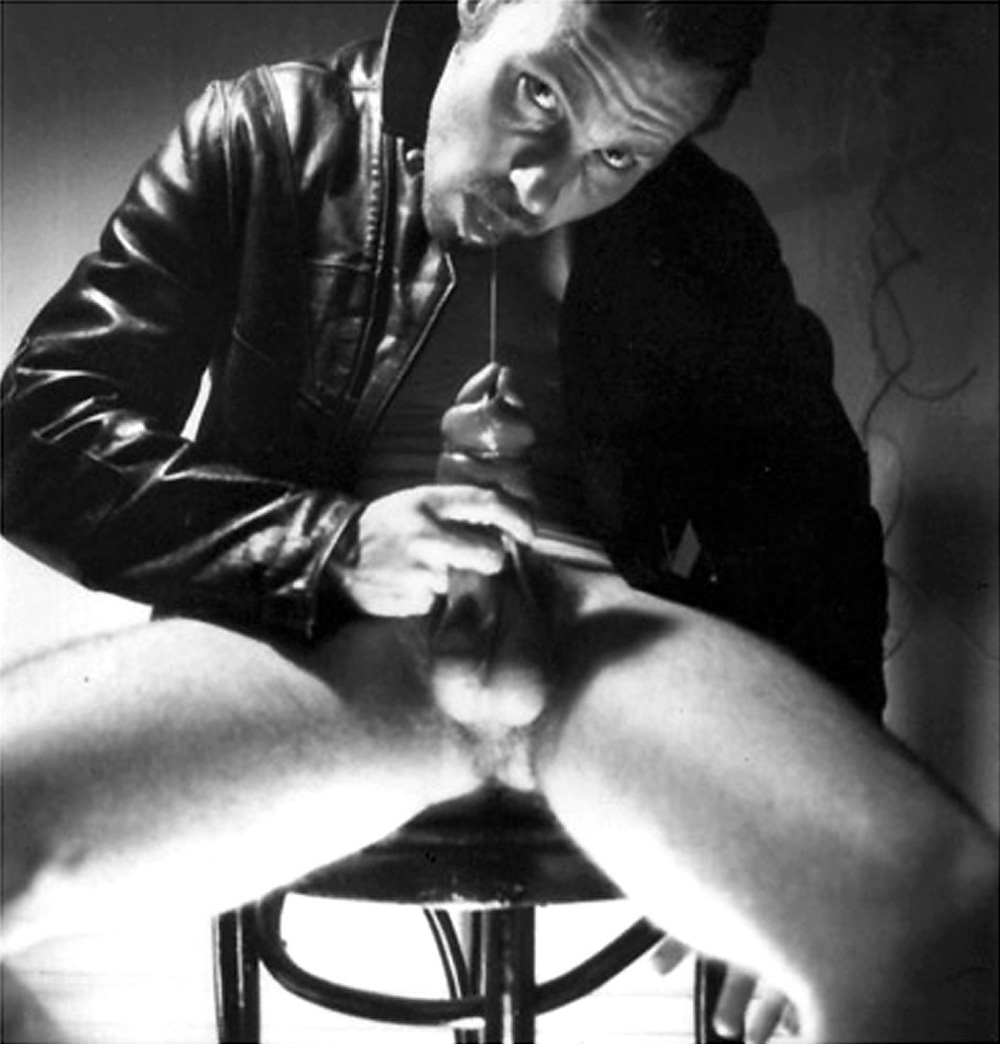
REX’s drawings stand out not only for their provocative subject matter but also for their meticulous craftsmanship, realized through a sophisticated stippling technique. This method involves the intricate application of thousands of tiny ink dots, an approach reminiscent of ancient master prints. Working exclusively in black and white, REX achieves a rich chiaroscuro effect, deftly employing strong contrasts of light and shadow to create depth and drama. Unlike true pointillism, which blends colored dots to form new hues, REX’s stippling focuses solely on modulating value, using pure black ink to articulate an expansive range of brightness and shadow. In this regard, his work revives the tonal precision characteristic of printmakers from centuries past, resonating with the delicate tonal gradations seen in stipple engravings of the 15th to 18th centuries.
REX’s approach to integrating this antiquated printmaking ethos into modern subject matter infuses his images with an intensity akin to the engravings of Dürer or woodcuts by Gustave Doré. The drama within REX’s scenes emerges from his strategic use of high contrast and fine detail—where bright highlights virtually illuminate against inky blacks, granting the compositions a striking sense of volume and depth despite their reliance solely on line and dot. His penmanship, rendered with such extreme precision, demands months of dedicated labor, bestowing each artwork with a level of craftsmanship far exceeding the ephemeral quality often associated with pulp illustration.
This labor-intensive process results in artwork that transcends mere pornography, offering a moody, theatrical atmosphere that elevates the erotic themes to a level of high-art refinement. By merging classic techniques with transgressive content, REX endows his fantasies with an etching-like gravitas that invites sustained contemplation. His drawing style aligns with the tradition of graphic novels and Japanese shunga prints, insisting on a thorough appreciation of their polished detail. Through the lens of stippling and stark chiaroscuro, REX positions his work within a timeless continuum of fine art, challenging viewers to see beyond surface titillation to the enduring craftsmanship beneath.
Frieze-Like Compositions and Multiple Viewpoints
Many of REX’s compositions are crafted as processional friezes, where the picture plane is dominated by a multitude of figures, evoking the flat, narrative bands emblematic of medieval and ancient art. This stylistic choice situates his work within a long tradition of narrative art, resonating with historical antecedents like the Bayeux Tapestry, whose horizontal procession recounts battle stories, or classical temple reliefs, where figures align in profile, invoking stories without the illusion of depth or perspective. By adopting this layout, REX fills every inch of his canvas with figures and ornament, embodying an erotic horror vacui—a fear of empty space where every element of the composition clamors for attention.
In REX’s hands, dozens of robust, muscular figures come alive within a single drawing, engaged in various states of lusty activity. The effect mimics a repetitive, almost pattern-like arrangement reminiscent of an M.C. Escher tessellation, imbued with the same hypnotic movement, yet replacing geometric abstraction with leather-clad men. This dense, processional style compels the spectator’s gaze to traverse the composition laterally, inviting an exploration of vignettes and characters as if unrolling a scroll or scanning an ancient frieze, rather than anchoring the view around a traditional focal point.
REX’s drawing titled Bathhouse exemplifies this technique, presenting a cross-section view of a steaming bathhouse, replete with hairy, buzz-cut men ranging from vagabonds to affectionately depicted rogues, each outfitted in fetish gear and occupying a stall that represents a unique stage for S&M interaction. This drawing teems with action: voyeuristic eyes and glory-hole openings adorn the borders, crafting a tapestry of carnal activity that leaves no void or silence in the tableau. This compositional strategy draws the viewer into a participatory experience, inviting them to become voyeurs themselves, scanning each compartment for its salacious narrative, much like one might peer through apertures along a corridor of vice, engaging with the multiplicity of stories unfolding within.
Beyond the density of figures that populate REX’s artwork, a distinctive hallmark of his compositions is the embedding of multiple layers of viewing, creating a dynamic and immersive experience. A recurrent motif in his drawings is the presence of the voyeur—a character who observes clandestine sexual acts through peepholes, two-way mirrors, or ajar doors. This motif invites the spectator to engage with not only the primary act being performed but also the layers of observation layered within the scene. One drawing might feature a figure focusing intently through a gloryhole viewfinder to capture the central tableau, while another places observers—and by extension, the drawing's external audience—in the role of devout onlookers witnessing a dominant character's performance.
This layered observation parallels a ritualistic experience at what REX might describe as the Church of Saint Priapus, complete with elements like "confessional gloryholes" and urinals repurposed as altars. By embedding secondary onlookers within his scenes, REX crafts meta-perspectives that encompass not only the erotic performances depicted but also the act of watching these performances, thus amplifying the illicit and theatrical nature of his art. Each drawing effectively contains its sub-audience, offering a reflection of our roles as spectators engaging in the contemplation of taboo.
REX infuses his compositions with a sly humor and irony, often depicting several men furtively sharing one peephole, or a chorus of eager faces pressing against cracks in a wall, each seeking their own secret glimpse. These elements speak to the communal-yet-hidden aspect of gay voyeurism, particularly resonant in the pre-digital era when public restrooms, bathhouses, and pornographic cinemas served as congregational spaces for individuals seeking both sexual adventure and visual satiation. Through this imagery, REX captures the essence of desire and secrecy, crafting works that resonate with a deeper understanding of the shared, though clandestine, experiences within the gay community, celebrated through the ever-watchful gaze of both the depicted and the real-life audience.
REX’s frieze-like approach to composition challenges conventional notions of visual hierarchy, effectively dismantling the expectation that one figure should dominate by size or perspective. In his work, each element vies for attention, creating an engaging, democratic visual field where all components hold equal weight. This balance results in what can appear as a surreal patterned tapestry, where numerous leather-clad bikers are seen engaging in similar acts, subtly altered yet recurring across the canvas. Such an arrangement imbues these explicit scenes with a rhythmic, almost decorative quality, giving them a charm that transcends their overt themes. In this manner, REX’s aesthetic connects deeply to the traditions of pre-Renaissance art, which viewed scenes more as symbolic narratives than as windows into realistic depth.
This stylistic choice strips away the notion of perspective grounded in Renaissance naturalism and instead confronts the viewer directly. Figures jostle for space on the picture plane, seemingly pressing outwards toward the observer, erasing any illusion of depth and forcing an intimate engagement. The repetitions and shallow spaces in REX’s compositions invite viewers into his structured chaos, much in the same way that Byzantine or medieval artwork demanded attention through ornate symbolism rather than lifelike representation. In doing so, REX crafts a domain that perfectly suits his themes - a world where no escape exists from the fervent assembly of bodies and desire.
In this immersive field, REX captures a sense of claustrophobic allure. The viewer, ensnared by the intricate mesh of forms and erotic expressions, finds themselves immersed in the same fervent web as the figures they observe. Through his artistry, REX collapses the distance between spectator and tableau, trapping us within a vivid labyrinth of sensuality. In this orgiastic motif, the lines between observer and participant blur, as the eye flits restlessly from one provocative vignette to the next, drawn inexorably through the undulating maze he meticulously orchestrates. In experiencing his art, we are voyeurs caught within REX’s complex and unending dance—a testament to his ability to transform appeal into narrative entrapment, echoing the intertwined layers of story and spectacle.
Iconographic Poses: Byzantine and Mannerist Influences
Much of REX's work, while echoing the expansive composition of a frieze or tapestry, imbues its figures with an iconic and hieratic quality. His male subjects are often depicted in carefully stylized postures—deliberately frozen and frontal. This decision to stylize over naturalism evokes parallels to Byzantine iconography, where saints are presented with formal gestures and an otherworldly presence. REX’s portrayals transform leather-clad men into a pantheon of secular "saints" and "martyrs" from the gay underground, inviting reflection on the subsumed rituals within this subculture. Icons, a portfolio REX released in 1977, capitalizes on this concept by explicitly framing his leatherfolk as objects of quasi-religious devotion. Commentary on Icons highlighted the presence of "images of worship" and a "rugged communion," portraying his BDSM scenes as ritual tableaux with participants elevated to archetypal symbols of desire.
Being a lapsed Catholic himself, REX infused many works with direct religious references, embedding subtle nods to his cultural heritage. Commentators have noted that several of his drawings interplay with religious iconography, drawing comparisons to artists like Robert Mapplethorpe who similarly explored tension between spirituality and sexuality. REX might portray a bound figure with a halo or arrange men in compositions echoing classical scenes of the Last Supper or martyrdom. In a particularly provocative image, he depicts a dominant figure literally worshiped by kneeling "acolytes" as he urinates on them—a scene that subverts traditional religious communion, complete with a "Communion Rail" and the "elevated alpha male" as the object of veneration.
Through these tableaux, REX transforms carnal acts into ritualistic performances, imbuing them with reverence akin to religious ceremonies wherein participants are positioned in poses reminiscent of sacred icons. The manner in which REX structures these scenes emphasizes the elevation of physicality to a form of sacrament, portraying desire as a powerful, unifying force. This interplay between the profane and the sacred in REX’s work not only pushes boundaries but also invites an exploration into how fetish culture creates its own pantheon, where devotion and sexuality intersect, hauntingly mirroring and challenging contemporary narratives of faith and worship.
Beyond the religious undertones, REX’s stylistic approach to the human form reveals significant affinities with Mannerism, a late Renaissance art movement noted for its intentionally elongated forms and artificial poses. In the manner of Mannerist masters like Pontormo or El Greco, REX distorts and extends the body, crafting figures that prioritize visual presentation over anatomical precision. His drawn men often appear exaggerated in their musculature and hyper-masculine features, with limbs intricately entwined or strategically splayed, each pose a calculated display meant to highlight every muscle and sinew. This deliberate awkwardness, or stiffness, aligns REX's figures with the Mannerist ethos, sacrificing reality for the sake of expressive design.
These characters frequently assume straight-on or strictly profiled stances, self-consciously presenting themselves as if aware they are being commemorated in iconic form. This is a divergence from the fluid dynamism of artists like Tom of Finland, whose work is marked by motion and anatomical ease. Instead, REX's men assume a statue-like presence, embodying a static significance that thrusts them into a realm beyond temporality, icons of desire rather than snapshots of individual encounters. They inhabit the domain of symbolic essence, representing not specific people but idealized archetypes of outlaw masculinity, akin to saints in a homoerotic iconostasis.
This stylistic choice might confound some viewers unversed in the nuances of REX’s amalgamation of pornography and art history, leaving them at odds with the Byzantine stiffness and allegorical nature imbued within his work. However, to the informed, the interplay between leather-bar debauchery and Byzantine/Mannerist formality reveals the core of REX's genius. He cleverly situates explicit sexual imagery within a discourse of the sacred and art-historical, compelling the audience to reevaluate the veneration potential of what might traditionally be dismissed as pornographic. REX boldly challenges conventional norms in gay art, forging new icons where Nazi symbols, Catholic rituals, and American machismo coalesce into a visual theology of leather sexuality. His unique style navigates "somewhere between Byzantine and Mannerism," elevating robust bikers and stoic cowboys into figures of strange, stoic elegance—embodying a harmonious fusion of church fresco reverence and fevered erotic imagery.
Outcasts and Forbidden Worlds
Throughout his body of work, REX consistently reveals a compelling fascination with society’s outcasts and liminal spaces. These are the spaces harboring men who exist on the periphery—drifters, outsiders, characters labeled undesirable, all inhabiting the gritty fringes of urban life. REX's chosen environments—flophouses, bathhouses, shabby hotel rooms, dingy back-alley bars, derelict cellars, and circus tents—stand in stark contrast to the idealized and sanitized venues often depicted in mainstream culture. Where others might seek the comfort of the respectable and safe, REX boldly ventures into the decaying realms where transgression grows unabated, capturing raw, unvarnished truths about gay existence.
His illustrations explore the settings that characterized pre-AIDS 1970s gay life—shadowy locales frequented for anonymous encounters but seldom acknowledged openly. According to Out magazine, his black-and-white drawings immortalize scenes of explicit gay sex among "roughened, muscular men in places like darkened dive bars, dingy alleyways, and seedy motels." These settings—entities of escape and clandestine pleasure—become both backdrop and character in REX’s work. Yet he does more than document; he amplifies, mythologizing these squalid environments. His scenes —dense with what some call "S&M humidity"— evoke senses beyond sight: the sweat, the poppers, the flaking paint, and stained mattresses become visceral elements, immersing the viewer in their atmospheric intensity.
In rendering such authentic and striking details, REX's compositions evoke the raw beauty of lives lived on the edge. A drawing of a low-rent hotel room, detailed down to the cockroaches and toothbrushes in a grimy glass, transforms a mere setting into a narrative of desperation and lust. The mood is unapologetically dark, erotic, and sleazy, echoing the works of earlier luminaries who discovered lyricism in squalor. REX's art finds kinship with the world of Jean Genet, whose mid-20th-century writings exalted the lives of hustlers, ex-cons, carnies, and soldiers. In REX's hands, these figures are cast as sacred complements within their tattered environs, imbued with a forbidden allure that transcends their circumstances to reveal an elegance within the forsaken.
A recurrent motif throughout REX’s work is the wandering or captive male, emblematic of a life lived on society’s fringes. His drawings often explore the image of runaways at a circus, youthful figures who have literally opted to "join the circus"—a metaphorical departure from conventional existence into the embrace of 'otherness.' These characters, transposed into the realm of the freak-show, represent the eternal quest for identity and inclusion within a world that neither comprehends nor accommodates them. REX's imagination extended to portrayals of captives—men ensnared in war or bound in a chain-gang—where he skillfully interweaves themes of power dynamics with the anguish of societal exile.
In his portfolio series Legends, REX delved into the tales of historic or mythical outlaws and captive heroes, reinterpreting their narratives through a richly complex homoerotic lens. These men, etched upon paper, bear the indelible traces of hardship: the scars, the ragged clothing, the gaunt visages, and the feral eyes—traits far removed from the polished depictions found in physique magazines. Instead, they embody rough trade, the danger-inflected persona warning of maternal caution—offbeat heroes in REX’s contemplative portrayal of an unaccepted dimension of gay life. Through his unwavering focus, leather-clad bikers, tattooed ex-cons, flophouse drag queens, and the anonymous frequenters of sex dungeons are elevated as protagonists within his unflinchingly candid narratives.
REX’s dedication to these outlaw scenarios unfolded through a series of creative iterations, as though he were crafting an epic saga requiring multiple chapters. The tenacity of these settings within his art's tapestry mirrors the enduring presence of these spaces within the landscape of gay culture: as societal acceptance progressed in visible arenas, a perpetual shadow world persisted in bathhouse backrooms and adult theaters. REX operated as an insightful visual historian within this clandestine domain, capturing its essence with both reverence and authenticity. His work underscores that, even amid growing visibility, there remained untold stories and spaces where raw vulnerability and defiance continued to thrive. By charting this shadow realm's topography, REX preserved an essential segment of cultural history, rendering the hidden both visible and validated.
REX’s work not only brings the world of outcasts to the fore but does so with an empathetic understanding that eschews judgment in favor of celebration. Within the 1970s gay leather scene—an enclave within an already marginalized community—his artwork was revered for its unapologetic portrayal of gay male desire. REX’s drawings unreservedly embraced gay bathhouse culture, capturing its essence during a period when such imagery remained ensconced in the underground. By elevating leathermen and "sex freaks" to prominent positions within his compositions, REX conferred a sense of dignity upon those deemed perverse. In doing so, he created what might be termed an artistic archive of gay outsider life: semi-anonymous bathhouse encounters, clandestine meetings at bars in the meatpacking district, and the gritty ambiance of piers and arcades—all were meticulously rendered in REX's ink and infused with heightened chiaroscuro drama.
These scenes often carried an implicit commentary, with their decaying environments and outlaw figures hinting at the manner in which such expressions of sexuality were relegated to society’s shadows. Love, in this context, was an underground phenomenon, thriving in the derelict spaces society shunned. REX's recurrent depiction of broken environments—be it a circus tent teeming with "freaks," a barracks engulfed in flames, or a subterranean prison—serves as a poignant metaphor for the precarious social standing of his subjects, who forged a community amid societal ruins. For REX, these illustrations transcended mere fantasy; they were part autobiography, part documentary. As someone abandoned at birth and familiar with life on the streets during his youth, REX harbored an intimate knowledge of the world he depicted.
The AIDS crisis and the conservative shift of the 1980s, which targeted the very sexual subculture REX thrived within, prompted his disillusionment and eventual departure from America. His relocation to Amsterdam in 2010—an exile from the "politically correct" United States—echoed the themes of exile present in his art. In essence, REX's portrayal of outcasts represents both a celebration of taboo gay experiences and a critique of how society forces certain desires into obscured, crumbling corners. Through his unwavering exploration of these spaces, REX ensured that the marginalized men of his era would not vanish into obscurity. His raw honesty, imbued with dark romanticism, challenged the politics of respectability, casting a spotlight on the forbidden truths of gay life. REX's knack for capturing the mood of flophouse interiors aligns him only with equally transgressive works, reminiscent of Genet’s clandestine visuals, underscoring his commitment to portraying the stark realities of life on society’s periphery.
Pornography as Philosophy: REX’s Transgressive Vision
REX embraced the often contentious label of "pornographer" with deliberate intent, constructing a personal philosophy that navigated the intersection of aesthetic and obscenity with an unflinching gaze. In his view, art’s potential for provocation lay in its power to transgress societal taboos, an idea he articulated with rare clarity and passion. REX pursued the notion that true pornographic art, to be distinguished from mere erotica, must push boundaries and challenge acceptability; only by breaching prohibitions could it harness its ultimate power. As REX and his commentators asserted, “The forbidden has power.” The potency of pornography, then, is drawn from its ability to reveal that which is meant to remain hidden. In a candid 1981 interview, REX contended that “Censorship is a desecration of the artist’s idea,” aligning himself with generations of great artists who relished the earthy, sometimes unpleasant reality of the human condition.
This belief system was not just an abstract credo but a guiding force infusing REX’s art. He was compelled to capture what decent society would prefer to overlook: scenes of smoking, needle use, and controversial subjects such as pederasty and bestiality. A reviewer encapsulated this rebellious drive, saying, “REX doesn’t care what you think about [those topics].” For REX, any effort to sanitize or self-censor was tantamount to relinquishing hard-won freedoms that gay art fought to claim. Initially, his work for gay magazines omitted the most extreme content—like "cum and fucking"—to meet market constraints, but as cultural conservatism deepened, so did his resolve to resist. He declared his allegiance to transgressive images by focusing increasingly on the unpublishable.
By the 1990s, REX had committed fully to marketing his art as a purveyor of "hard-core images", utilizing mail-order channels to bypass mainstream aversion. He named one exhibition “Corrupt Beyond Innocence,” a provocative declaration of the very elements that drove others to reject his work. This embrace of moral ambiguity championed his place as an artist who didn’t merely provoke for the sake of it, but to comment on and resist the societal tendencies to marginalize and sanitize. In seeking out the unrestrained and the provocatively forbidden, REX ensured his place in the artistic pantheon as a champion of true pornographic power—a realm where transgression wasn’t just part of the art; it was the backbone of its integrity.
At the core of REX’s artistic philosophy lies a profound confrontation with societal hypocrisy, particularly targeting the censorious voices of Church and State—institutions historically zealous in their drive to control human sexuality. REX, with his characteristic slyness, often pointed out the irony in their fervent criticisms, observing that everyone else "knows where babies come from and what happens in the dark." To REX, pornography served as a weapon against these repressive forces: a means to "lance society’s boils," a phrase borrowed from the lexicon of his admirers. He saw pornography as a mirror reflecting the raw, unvarnished truths civil society works tirelessly to cover—the primal drives that exist beneath polite veneers of civility.
In his work, REX frequently drew parallels between men and animals, weaving this theme into both his art and his commentary. His drawings portray men as part of a "magical bestiary" of sex beasts—depicted through dog masks, pony-play scenes, and pig iconography. Characters emerge as "bulls, bears, pigs, ponies, dawgs, and pups," anthropomorphized into a fetishistic tableau. This imagery does not serve as an insult but as a medium to strip men to their instinctual core. REX firmly believed that when unobserved, men revert to their base nature—thus in his art, they are shown with unrestrained delight, rutting, slobbering, and sniffing each other with joyful abandon, blurring the lines between human and animal, cultivated and crude.
By embracing bestial imagery, REX directly challenges the notion that sexual "deviance" renders individuals sub-human. In his vision, all men are inherently animals in their natural state; those labeled "deviants" simply possess the honesty to acknowledge and embrace this truth. The "anonymous sweaty tops and groveling sexpigs" showcased within his orgies are portrayed with documentary precision, yet elevated to mythic status. Through this lens, REX not only collapses superficial distinctions between elevated man and primal beast but also insists on the authenticity of desire as an intrinsic component of the human experience. This bold declaration of humanity’s dual nature stands against the backdrop of a society striving to repress its most fundamental truths, offering a radical reframing of identity and desire.
The experience of engaging with REX’s work is intended to be an intensely illicit and solitary journey, mirroring the private consumption of pornography itself. REX articulated the idea of pornographic art as something inherently "forbidden, and consumed in isolation, for oneself," emphasizing a personal encounter far removed from collective experience. His drawings, often dispatched in unmarked manila envelopes, were meant to be savored in the privacy of one’s own space, away from prying eyes. This personal, secretive engagement—a transaction between the art and its viewer outside the realm of public approval—was essential to the thrill and authenticity REX sought to impart. Displaying these works within the sanctioned ambiance of a gallery would dilute their provocative charge; art stripped of controversy, hangable in the living room, could not truly align with REX’s vision of pornography.
REX’s deliberate avoidance of the public eye and mainstream exhibition circuits was a strategic cultivation of notoriety. He preferred the underground currents of distribution, circumventing the conventional pathways that might neutralize his work’s impact. Exceptionally when his works surfaced in public view, they provoked critical backlash. An infamous critique appeared in a 1978 Village Voice article, decrying the "end-time chaos" and perceived fascist elements within his art; this reaction fueled REX's belief in the unyielding potency of his creations. Such outrage confirmed for him that his art wielded the taboo power he envisioned. His response to those unsettled by his imagery was succinct and revealing: "That’s the point!" The disturbance indicated the art's success in puncturing through societal conditioning.
REX sought not mere recognition, but a visceral confrontation with the viewer. The aim of his art was to provoke, to challenge comfort zones, to unearth emotion beyond the boundaries of ordinary acceptance. The visceral response from an audience—a pulse of discomfort, even disgust—signaled that his art achieved its intended disruption. In piercing through ingrained norms, REX’s work demanded introspection and engagement with the forbidden, reinforcing that its true power lay in its ability to evoke raw, unfiltered reactions. His oeuvre is a testament to art’s capacity to transcend aesthetics and delve into the provocative and profound, inviting viewers to confront not only the art but their perspectives on the cultural taboos it addressed.
In his life and work, REX transcended the traditional confines of pornography, transforming it into both a philosophical and political declaration. His X-rated art was not merely erotic but a deliberate act of rebellion against what he perceived as a hypocritical and "dysfunctional" society. His defiance was pointed, aligning himself with the marginalized status of his community and art. By embracing the label of "pornographer," REX reclaimed a term often used to delegitimize and marginalize, framing it instead as a bastion of truth. In his conception, pornography was a means of unmasking: it revealed both physically and metaphorically the "forbidden but irresistible animality" inherent in men—a reality that society avoids yet cannot shun.
REX’s work sought to confront and provoke, exposing the unvarnished core of male lust that civilization continually seeks to suppress. If his drawings shocked or unsettled, it was because they boldly laid bare the human condition, tapping into desires that linger just beneath the veneer of societal decorum. His oeuvre is characterized not only by its distinct visual style but also by this conviction that art, to hold significance, must risk being labeled as pornography. He argued that pornography, when executed with honesty, must unveil primal truths about human and animal nature with unwavering fortitude.
REX's enduring legacy, therefore, is rooted in more than his artistic prowess; it resides in the ideology that sexual transgression is fundamentally liberating. Each piece he created became a component of a larger thesis on freedom, inscribed meticulously in the intricate details of his monochrome artistry. Through his unwavering commitment to exposing raw truth, REX advanced the notion that the act of revealing taboo is a gateway to emancipation, crafting a narrative of resistance and authenticity. His art stands as an enduring testament to the belief that only by risking total exposure, artistic expression can challenge norms and spark genuine transformation in societal perceptions.
The documentation and analysis of REX's life, art, and stylistic journey are extensively covered in a variety of profiles and historical records. For a comprehensive look at his technique and influences, the Wikipedia article on REX provides a foundational overview, complemented by Jack Fritscher’s detailed essay "Rex in the Back Room" in the REX Verboten! collection. These sources illuminate the unique underpinnings of his approach, shedding light on the meticulous crafting of his erotic art pieces. Descriptions of specific works and recurring themes are further expanded through Fritscher’s candid interviews with REX, alongside contemporary reportage from publications like Out magazine. These narratives collectively map out the evolution of REX’s artistic vision and underscore his engagement with cultural taboos.
The precision and intricacy of REX’s stipple engraving techniques are demystified through references such as Wikipedia, with Francesco Bartolozzi’s Cupid and Aglaia print serving as an illustrative example of this enduring tradition. These connections to historical methodology, particularly stipple engravings, foreground the way REX melded time-honored craftsmanship with avant-garde imagery. The interplay of Byzantine perspective and the concept of horror vacui, highlighted in relevant scholarly literature, further contextualizes REX’s work within a broader historical art framework. Through these art-historical parallels, REX’s efforts to blend styles from previous centuries with his radical subject matter become clear, embodying a singular vision of art that defies easy categorization.
All these references and analyses intertwine to craft a narrative of how REX revolutionized erotic art by melding traditional artistic styles with confrontational erotic themes. His synthesis of classical influences with bold, modern content gave birth to a distinct vision of forbidden art that continues to challenge and inspire. By weaving together disparate threads of artistic tradition and controversial content, REX not only expanded the boundaries of pornographic art but also entrenched his legacy as a pivotal figure in its evolution, crafting a legacy of uncompromising exploration and audacious originality.
| Title | Series | Date · Place | Dimensions |
|---|---|---|---|
| Attention Grabber | 1983 · New York | 12 × 11 in | |
| Back Alley | 1989 · New York | 9½ × 12 in | |
| Beauty and the Beast | 1987 · San Francisco | 9 × 11 in | |
| Captain Hook | Peter Pan | 1996 · New York | 13½ × 10¾ in |
| The Carpenter (“De Timmerman”) | 2015 · Amsterdam | 8¼ × 10¼ in | |
| Eddie the Sexual Curiosity | Sex-Freak Circus | 1991 · New York | 14 × 11 in |
| Feasting on Dog Dick | 1990 · New York | 11½ × 9½ in | |
| Fireman | 1990 · New York | 9½ × 11 in | |
| Glimpse | 2002 · New York | 8½ × 10¼ in | |
| Grain Bin | 2019 · Amsterdam | 8½ × 11½ in | |
| Helping Hand | 1986 · New York | 9 × 11 in | |
| Highway Demon | 1988 · San Francisco | 9½ × 12 in | |
| Interspecies Orgy | Sex-Freak Circus | 1992 · New York | 11½ × 14¾ in |
| Johnny Young (Portrait) | 1976 · New York | 7 × 10 in | |
| Little Dutch Molen | 2014 · Amsterdam | 8¾ × 11 in | |
| Making the Deal | Sex-Freak Circus | 1992 · New York | 13¼ × 10½ in |
| Matchmaker | 1987 · San Francisco | 9¼ × 11 in | |
| Peter Pan Cover Art | 1995 · New York | 13¾ × 11 in | |
| Piss Balloon | 2011 · Amsterdam | 9¼ × 11¼ in | |
| Pleasure Island | Sex-Freak Circus | 1995 · New York | 12½ × 10½ in |
| Puppet Master | 2012 · Amsterdam | 11½ × 8¾ in | |
| Sideshow Freaks | Sex-Freak Circus | 1992 · New York | 14¾ × 11¼ in |
| Squat and Gobble | 2019 · Amsterdam | 8½ × 11½ in | |
| Strongman | Sex-Freak Circus | 1991 · New York | 14 × 11 in |
| Surprise | n.d. | 8½ × 11½ in | |
| Tijuana Midgets | Sex-Freak Circus | 1991 · New York | 13¼ × 10¼ in |
| Totem Pole | 1994 · New York | 10 × 12½ in | |
| Worship This | 2022 · Amsterdam | 8½ × 11½ in |
Authorized Anthologies · The Estate of REX
REX. Rough Trade. The Estate of REX. 50 drawings; the five pulp-format magazines of the 1970s, collected. The foundation of REX’s published work.
REX. Adwerk. The Estate of REX. 54 drawings; the commercial work — bar and nightlife posters, private commissions. 92 pages, 8½ × 11 in.
REX. Leather Cult. The Estate of REX. 155 drawings; the visual culture of the leather underground, created for A Taste of Leather, Folsom Street, San Francisco. 136 pages, 8½ × 11 in.
REX. Portfolios. The Estate of REX. 155 drawings from the mail-order portfolios issued as Drawings by REX.
REX. Bound. The Estate of REX. 124 drawings; the three self-published magazines of the 1970s, digitally remastered and approved by REX before his death in 2024. 106 pages, 8½ × 11 in.
Self-Published Magazines & Portfolios
REX. Rexwerk. Self-published by the artist.
REX. Männespielen Number One and Männespielen. Self-published by the artist, 1970s; collected in Bound.
REX. ICONS. Self-published by the artist, 1970s; collected in Bound.
REX. REX Verboten!. Self-published by the artist.
REX. Floriade. Self-published by the artist, Amsterdam.
REX. Lurid Collection. Self-published by the artist.
REX. Pagan Collection. Self-published by the artist.
REX. Mail-order portfolios issued as Drawings by REX: Armageddon, Legends, Nightwatch, Paladin, Portraits, REX Men, REX Uncut, Scorpio, Sex Freak Circus, Tawdry, Undercover, Rexwerk. Issued serially by the artist; collected in Portfolios.